What TA Can Steal from Growth Hackers
Hear how Matt Stephenson from Bain Capital Ventures applies lessons from the growth hacking era to modern recruiting strategy.
Speaker

Key Takeaways
- Recruiting differentiation increasingly comes from behavior, not tooling alone
- The best recruiters deeply understand their company, product, and market
- Experimentation should become a core recruiting operating principle
- Long-term relationship building is more valuable than short-term outreach volume
- Recruiting teams should think more like growth teams and less like process operators
- AI is accelerating change, making recruiter adaptability more important than ever
- Strong recruiting organizations create leverage through partnerships and shared ownership
- Recruiting works best when it becomes a highly collaborative, multiplayer function
Transcript
Note: transcript is auto-generated, there may be typos.
As Jim mentioned, my name is Matt Stevenson. I'm the head of tech talent at Bain Capital Ventures, and what that means is I spend a lot of my time with founders and recruiters as they're at all different stages, sizes, and even types and categories of companies. And I'm actively involved when they're looking to build the recruiting teams for the first time, and also when heads of talent are looking to evolve, expand, or just change up the teams that they have.
And I think many of you can agree with this, but I think over the last couple years I've seen recruiting get a little mid. And so today I'm hoping to ignite a spark, and do so in the form of a little time traveling. And I'm gonna take you back to a talent trend that we saw in 2016, and I'm gonna apply that to the war of talent that we're in today, and I'll leave you with a challenge that you can take back to your teams and hopefully implement and have a little fun with it So you've probably noticed if you're on Instagram, there's been a little bit of this like fun with the look back what we were all doing 10 years ago, and I totally ripped that off and took it for the inspiration of this talk today.
I was ... It takes me back to deep in the throes of being a series A recruiter, solo recruiter. I was competing with hot companies at the time, like Yik Yak and- ... Allbirds had just dropped their first and only shoe, so they were still a shoe company. And when I tell stories like this to the young founders that I work with today, they're like, "All right, Unc, here we go."
But I think that the power of Unc is being able to bring some of this wisdom, from the past and share it with y'all today. So before there were cracked engineers, there were these things called growth hackers, and I'd love to actually see a show of hands in the audience of who remembers their company leaders talking about growth hackers for the first time?
Amazing. So we have some fellow Uncs in the room. This is great. So i- in 2016, every company wanted a growth hacker, but nobody could really define what the role was, but everybody agreed on it and knew one thing, and that's if you were able to hire a growth hacker, your company felt uniquely advantaged.
And if I can apply that to today, I guess maybe just for the recency effect, I'd love to see a show of hands if you're still trying to figure out what the hell a cracked engineer looks like on paper. Yeah. I'm like totally in that camp right now. But what I've figured out right now is that cracked engineers have incredibly high agency.
They're obsessed with users and impacts. There's a deep knowledge of the tools, systems, and the products, and they also move incredibly fast. And so when I say I get to bring some wisdom from the past, pay attention because this kind of sounds a little bit familiar to what we were experiencing a decade ago.
So these growth hackers, these were small teams. They had massive impacts, and they knew the product better than anyone else. They were hyper-focused on only one or two metrics. It was very different than like a full-blown analytics team. And what's interesting is that they didn't have better tools. These were like fast and cheap experiments.
They broke the norms of the banner ad to reach their target market, and I think what's the most important is that they acted with autonomy. So they didn't wait for permission. They were testing fast, they learned, and they shipped things. And so if I could sum it up in one way, growth hackers behaved differently.
And if I run that parallel to the state of recruiting and what I'm seeing in 2026, it's just not there. So we have incredible tools. I think everybody can agree. They saw the keynote this morning. We have an incredible talent market, but we're all following this hive mind behavior. It gives me that NPC energy, which if you don't have a teenager keeping you up on your slang, it's like a gamer term for non-player character.
But it's really recruiting's gotten really monotonous, and there's not really a ton of differentiation. And so before you turn to your partner and the person next to you and you say "Geez, Matt, you're pretty bold for showing up to the Ashby conference and saying that we're all chopped."
I'm gonna clear the air 'cause I do get to work with exceptional recruiters on a daily basis, and I know we have exceptional recruiters in this room, and there's patterns to them. And the recruiters that are thriving are following the way of the growth hacker, and they're behaving differently. And so how can we capitalize on this opportunity, especially at the rate of change that we're seeing, to take charge of this and bring it back and think differently about what we're doing?
So I don't think this is about continuing to chase the latest and greatest tools. I think that we all know, and I think we can all agree that the tools are the best that they've ever been. This is about really redefining behaviors. And when I look at this landscape right now and the way that AI is reshaping recruiting every step of the way, and it's changing incredibly fast, I do think we're on the cusp of seeing very large behavioral shifts, and I think right now is the perfect time to have our own growth hacker era.
So let's talk about what I'm seeing some of the best recruiters doing and seeing how you can kinda use that as inspiration to take back with your teams So these are the four, I'll just use four for example, but these are the four core behaviors that I'm seeing consistently in top performers, and they map almost perfectly to what made growth hackers excel as well.
So their obsession with the products, the way that they're experimenting, how they're reaching talent to begin with, and how they're multiplying themselves through leverage. So we'll click into each one of these. And if I look at product obsession, this is like deeply understanding your company, down to the moat, down to the opportunity, the competition, really knowing it better than anybody else on the team would.
You wanna be able to go in and build a relationship with the stakeholders, the domain experts. They're befriending engineers on the team. They're attending engineering team meetings and they're really just compiling a list of the candidate questions that they're getting on the calls.
They're going chasing the finance team to understand the gross margins of the business, the unit economics, and even what landed with investors in the last round of fundraising. So the ones that I see really that are thriving, they're not waiting for the hiring managers to sell them their team or their role.
They're actively making time to go in and do this. So the goal here really is get to the end of that recruiting call, and that candidate has to ask "Did you say you're on the talent team?" That's the dream state. All right, and when we look at experiments the landscape here is really changing monthly.
And I had an AI researcher from Anthropic say the same thing at one of our poker nights recently, and so I knew when I heard it from them it's real. If a researcher is feeling this is definitely a shift that we're seeing. Yet we're, like, all following the same doom loops of stale sequences or very generic comms that we set up in this scheduling automation a year ago.
There, there's not really this, like- spirit to adapt and to thrive and try new things. The question I'd pose to you is, like, how often are you guys trying new things? Because I think the ones that I see that are thriving are using experiments continuously, and they're planning in cycles, they're running hypotheses with the business, and then they're reporting them back out and seeing how it went, and seeing if it's something that we should shift to and adapt full time.
And honestly, I think experiments are one of the best ways to influence your stakeholders because it really becomes a partnership, and I think that's something we always talk about is recruiting and the business becoming a partnership. Experiments are an incredible way to make that happen. This also helps that feeling of just getting blamed when things don't work and it all falls down to recruiting.
I think we can all agree we hate that. All right, and then distribution. So I see distribution in kind of two different parts. So you have where you get engagement to begin with, but you also have a piece of brand recognition here. And I think the big trap with distribution is this idea of short-term thinking.
So we really need to build these systems for long-term funnels. So I think as you all know there's a bunch of roles that probably needed to have filled yesterday in your company, and we all know that the top talent's not really on that same timeline. And so we still need ways to, if we do-- or if we are lucky enough to engage with one of them, like, how do we build the long cycles to be able to land them one year, two years, three years down the line?
I think what I'm seeing is a lot of, recruiting just sits on LinkedIn, they sit on Juicebox. They're looking at exclusively net new outreach. They're never really revisiting, the past candidates that they reached out to or doing, else with it. And so the ones that I do see excelling are really going into or creating the environments that the talent is spending time in.
And I know that might feel a little bit awkward sometimes, so I've included a picture of myself here as I walk into the living room of a twenty-three-year-old founder's house because they're still working out of their apartment. It does feel a little awkward, but you can get to that relationship pretty quickly.
No, I'm kidding. I think the best recruiters really are they're going and finding-- they're creating the reason for engineers to engage, to stop by their office. They're assembling engineers to go on missions with them to conferences and Hack the North or NeurIPS or other kind of IRL events.
And it really, as what I said on the partnerships aspect, this is a really good way to do it. This is also a really good segue to leverage because this is also the first thing that I talk to with founders when we're thinking about building out their recruiting teams for the first time, is that hiring a recruiter isn't, and I think we all know this, but hiring a recruiter is not a replacement for anything.
It actually is a supercharger for all of your efforts. And so the more that you can kinda turn this into your advantage the better off. And I think one of the pro tips is always the more fun that you can make recruiting in your company, the more leverage you're going to be able to create. And so I see recruiting as a very multi- player sport.
And as the talent lead, you are the captain, and you get to set the tone as a captain. And so the ones that I see are thriving and the ones that have done this well have built strong inbound channels. They have really strong referrals that are working in their favor, and they've really built this one team mentality.
So I mentioned I was going to leave you with a challenge And the challenge is for the next 30 days, pick one of these three areas and go and attack it. Pick a bottleneck, run an experiment, or go IRL. If you need some ideas to kinda help cook on this, I think if you think about bottlenecks, manual processes, right?
There's a lot of workarounds in manual processes, maybe because you haven't hooked up the Ashby instance to your HRIS, or HRIS yet. Or maybe your offer workflow is something that sits outside of the system, right? Pick a bottleneck and go attack it. With experiments, how often... We talked about this a little bit, but how often are you revisiting those sequences after those three to four emails run dry?
Are you going back in, checking engagement, and seeing is there another path to getting in touch with this person? So maybe for the next 30 days go outside of LinkedIn and email and try to message them in a different way. So go exclusively on X and try DMs on X for the next 30 days. Or maybe your hiring manager has a wild idea that you've been super skeptical of, and so you've been dismissing them and pushing it off.
Use this as an opportunity to create that partnership, to go together, scope out goals, scope out what success looks like, run the experiment for 30 days, and come back together with an honest retro. The third for going in real life we're here at a conference. There's no excuse not to start this one today.
So start thinking about goals and what you want to get out of the networking sessions, and go find three people after hours here that you say, "I know them, but I don't know them, and I'm gonna go get to know them a little bit better." So maybe you can ask them what else they're doing to get out from behind the keyboard and go recruit in real life.
Or maybe you're gonna find... Maybe you're sitting here, actually, and you're not yet an Ashby customer. You can go find somebody and talk to them about how switching from Greenhouse was the best decision they ever made. In wrapping all this up, I think we look at growth hackers and we say they didn't need better tools, but 10 years later, we have 100X better tools. And so it's more about the tactics and the behaviors that haven't evolved, and so I'm hoping this really ignites a little bit of a spark and something exciting for you to go back and look at the landscape a little bit differently.
Thank you.
Recommended Sessions
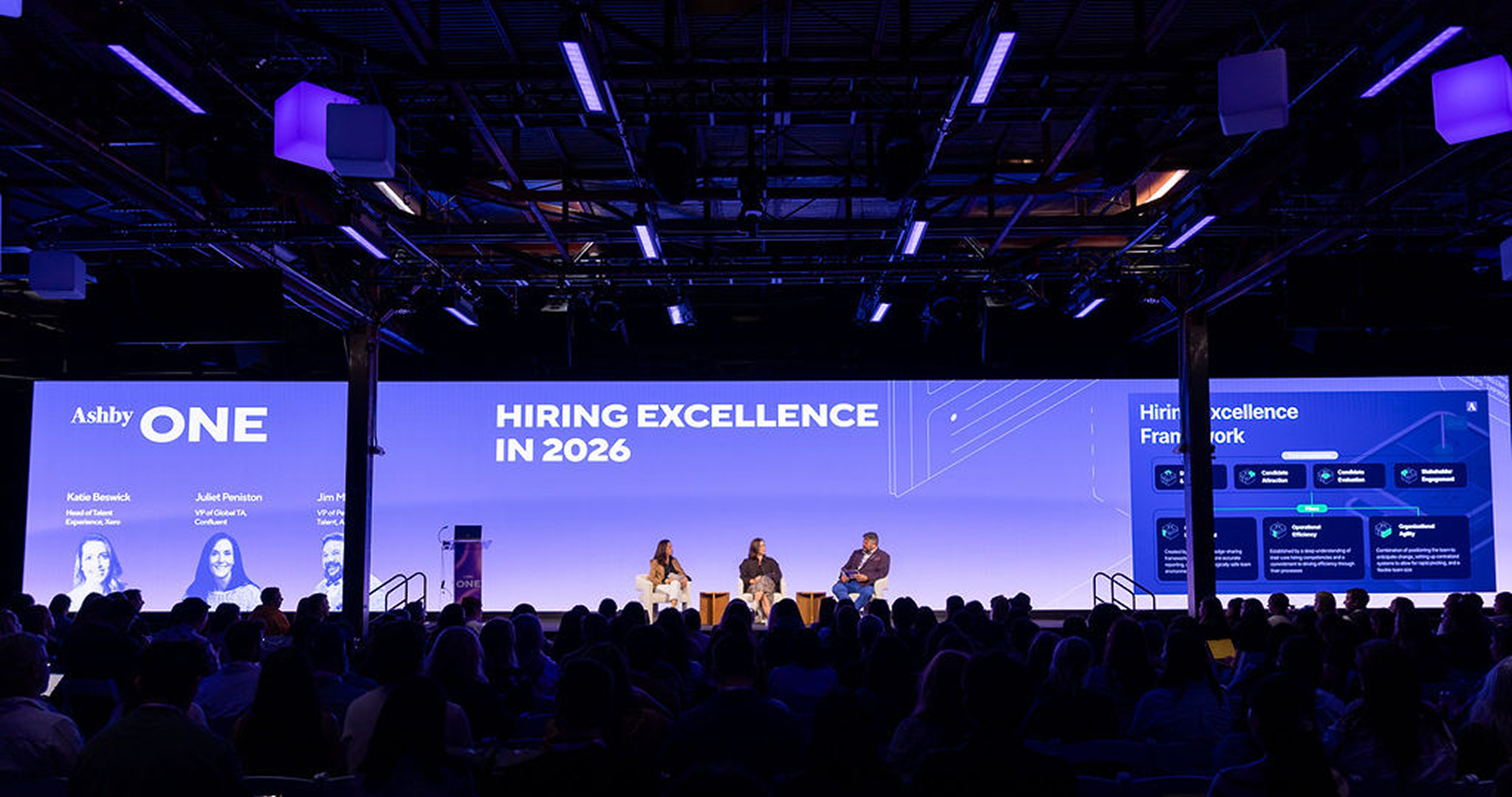
Hiring Excellence in 2026
A discussion on headcount planning and finance partnerships, the rise of candidate fraud, and how top TA teams are thoughtfully adopting AI — and what it means for the future of the recruiter role.
View session
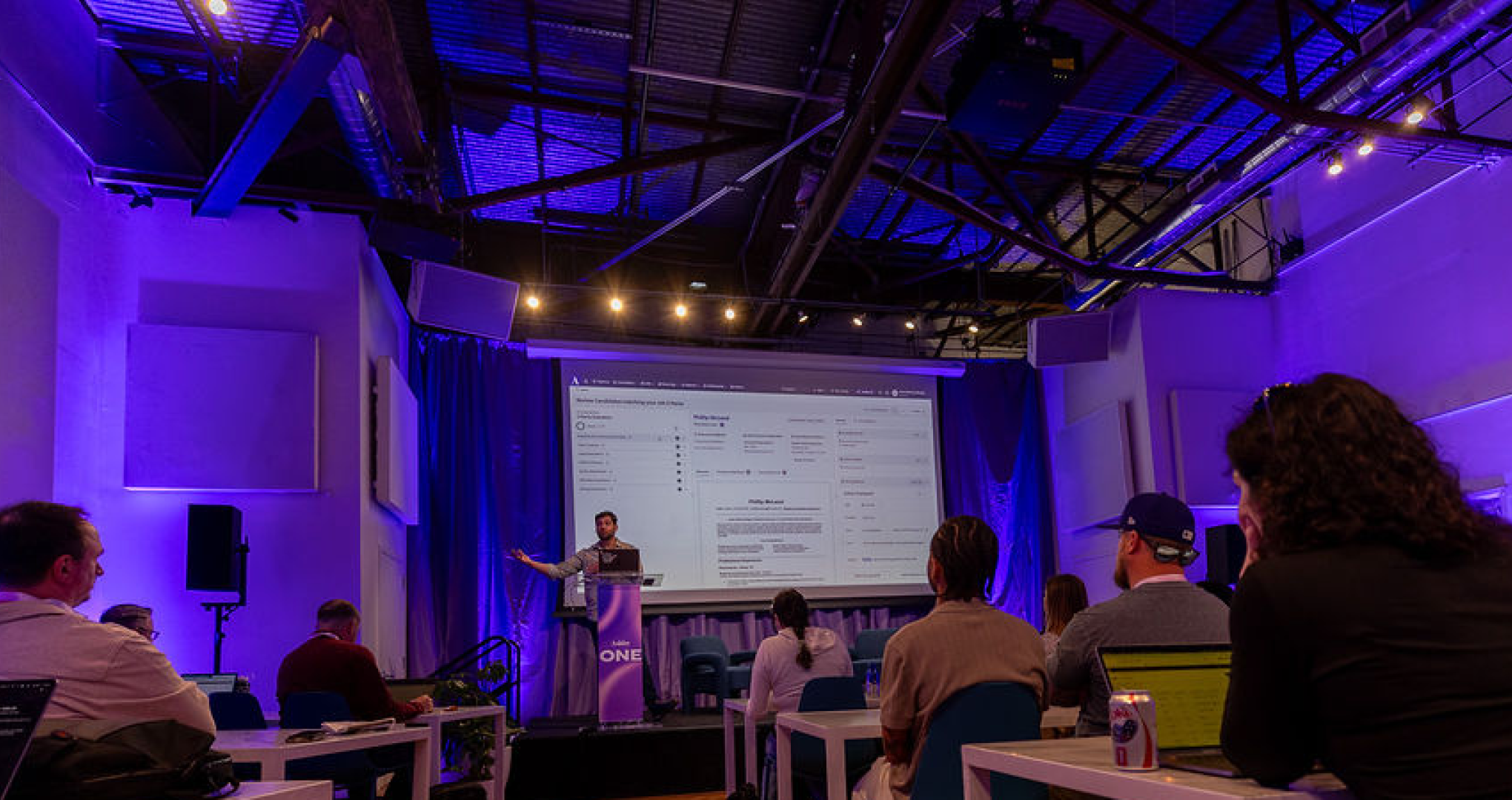
What's New in Ashby
An exclusive first look at Ashby's newest features with live demos from the product team — covering AI Talent Rediscovery and Custom Agents.
View session