Hiring Excellence in 2026
A discussion on headcount planning and finance partnerships, the rise of candidate fraud, and how top TA teams are thoughtfully adopting AI — and what it means for the future of the recruiter role.
Speakers



Key Takeaways
- Move your capacity model from offer accepts to starts. Business leaders and finance both care about when someone is in the seat, not when they sign the letter.
- Overlay TA capacity data, conversion rates, and time-to-fill onto headcount plans. A wish list of roles is not a plan.
- Running two-week sprint hiring cycles (borrowed from engineering) helps teams prioritize depth over breadth and deliver quickly on what matters most.
- Treat finance as a weekly, not annual, partner. Transparency on TA capacity, a seamless data loop across systems, and regular commits build the trust that gives TA a seat at the planning table.
- Candidate fraud has evolved from opportunistic resume padding to sophisticated, often state-sponsored identity fraud. Every team needs a multi-layer detection process, not just recruiter instinct.
- Separate fraud detection from recruiter judgment — flag and escalate to InfoSec rather than making recruiters the decision-makers. Shared responsibility reduces anxiety and improves accuracy.
- The highest ROI on AI adoption comes from giving teams time and space to identify their own pain points and build their own solutions — bottom-up adoption creates lasting behavior change.
- AI frees up time for deep human connection: embedding in the business, building candidate relationships, and proactive talent community building. That human layer is what AI cannot replace.
- Build AI adoption around three pillars: technology (identify and buy or build the right tools), enablement (train the trainer, not just the ops team), and experience (improve candidate engagement with reclaimed time).
- Avoid 'launch and abandon' by treating AI implementations as version one, measuring usage and outcomes, and iterating continuously.
Transcript
Note: transcript is auto-generated and may contain minor inaccuracies.
Jim Miller: Hiring excellence actually means so much to us. And it's one of my first projects when I joined was to, uh, help build the hiring excellence framework that we have, and you can go onto our website and, and find that. Everything's on there in our recruiting blog. There's some booklets if you've ever been to any of our dinners as well. Um, and really what we, we wanted to focus on was helping TA teams realize that they don't have to be excellent at everything all at the same time. It's about picking and choosing where you really need to focus in any one moment. And I'm really excited to bring out two guests, uh, to talk to me about this today. So we've got Juliet Peniston and Katie Beswick. Right. Juliet, I get to intro you first. Juliet is the VP of talent acquisition globally at Confluent. Leads a global recruiting team, spent the last 20-plus years building and scaling talent functions for high-growth tech companies and helping teams hire the people they need to grow, execute, and achieve their business goals. Katie is a global talent acquisition leader with 15 years of experience leading high-performing teams and leading talent strategy across diverse markets and functions. She's known for creating strong business partnerships, bringing clarity to complexity, and building scalable hiring practices that drive lasting impact. Ask Katie about traveling to 20 countries in a van with a three-year-old. Thank you both, both for being here. Let's get into it. So we've got three themes we're gonna talk about. The first one is headcount planning, finance, and capacity. And I think this is top of mind for pretty much everybody who's here at the moment. If your headcount planning cycle is anything like mine used to be, you've probably gotten your footing for the year by about now. You roughly know when you'll be headed back to the drawing board for H2 or for next year. And the best talent operators that I've worked with are leaning into strategy and planning competencies within our framework, and are helping to set those plans.
They're in the room when the headcount planning is happening. Katie, you stepped into Xero and inherited a function that was doing a lot, but without the systems or clarity needed to scale. What was Xero's approach to headcount and capacity planning when you joined?
Katie Beswick: Uh, so the business had an annual headcount planning cycle, I would say.
Um, but it was very much a wishlist of roles that needed to be hired. I don't think we really overlaid or thought about anything other than the volume, so what roles were really critically important, what roles had the most impact. We didn't layer any TX capacity data over, over the wishlist of roles, or even time-to-fill data, conversion rate data, to know if we could even achieve the plan. Um, so I think more recently we've spent a lot of time in actually bringing key teams together. Um, so XLT, our leaders, our embedded ops team, which are absolutely amazing, and also finance, to sit down and go, "Okay, well, how do we prioritize what's critically important? What has the most impact? What can we actually deliver?" Um, and then giving the team, for the first time really, an outlook of like six months of, "This is what you need to achieve in the next half." Um, so we're very early days. It's like the first round of it. Um, and we recut and reprioritize on like a monthly cycle. So each month we get back into the room, we sit down, we go, "Right, okay, how are we tracking? How are we pacing? What things have become more important? What things maybe have become less important? What new backfill roles have come through that we need to consider?" So that's the, always the thing that used to kill us was like the backfill piece and where that fits in in the overarching, um, yeah, scope of work. Um, and it's, it's working pretty well so far.
Jim Miller: Fantastic. You've done a huge amount in a short period of time. And when we were talking in the prep, you mentioned moving to this, like, sprint hiring model. Can you help tell us a little bit more about that?
Katie Beswick: Yeah. So I think prioritization is great, and having a map of roles.
But I think what the team was really struggling with was, how do we then operationalize that? So you get a list of roles for six months. Where do I start? What do I focus on? How do I get through the volume of roles quickly, rather than spreading very thinly across everything? So we've kind of adopted kind of like an engineering approach, I would say. So we're running two-week sprints, where the team have got really clear focus on a certain subset of roles or a role archetype, so that they're deep within a pipeline, doing a lot of proactive sourcing, and then having clear goals for that two-week sprint. So what do we wanna get at the end of it from a shortlist perspective? How many resumes are we gonna sit down and discuss with the business and move through? Um, so we're re-cutting their priorities and their sprint cycles every two weeks to help us deliver quickly on the things that matter the most.
Jim Miller: Amazing. And Juliet, you've talked about having a capacity model at Confluent that's highly accurate because it's not just based on start- sorry, because it's based on starts and not just offers. That level of predictability can't be achieved without an awful lot of effort, right? What did it take to build that level of trust with the business, and what changed once talent had a more credible voice in that planning?
Juliet Peniston: Absolutely. So, um, when I first got to Confluent, there was, I'll call it friction, between TA, the business leaders, as well as finance. Um, and so one of the things we did as a pretty simple shift is we moved away from offer accepts and started talking about, uh, starts. 'Cause our leaders, face it, they don't really care about when somebody signs a offer letter. They actually wanna know when that person's gonna be in that seat. And then from a finance perspective, they really wanted to know when the person, you know, when to start budgeting for that person. Um, so we, when I say we, my fabulous ops team right here in front, hello ladies, um, they created a model that was grounded in historical data. Um, and it, uh, accounted for recruiter ramp time, also the conversion rates, um, also timing by region, and the various role types as well as notice periods. And so what we ended up building and how we built that trust is we built not just a reporting on what were the activities, but we were also able to, um, predict the outcomes. So that was a huge win for us.
Jim Miller: And, and you told me again in the prep that your team has embraced a sales function mentality in TA. How does that show up in planning cycles and conversations?
Juliet Peniston: Sure. So we sell. We sell a company. We sell jobs to people. Um, and so we have our forecast. We forecast monthly. We also do commits, and we're measured by how well we do with our commits.
Jim Miller: Fantastic. And I'm thrilled with the partnership that I have with finance at Ashby. Shane and I work very, very closely together, and we've fine-tuned our planning to align to our business outcomes to almost just-in-time hiring. What advice would you give to ... Well, tell me, first of all, how are you partnering with finance, um, around headcount capacity planning?
Juliet Peniston: Yeah. So we have, um ... So the biggest lever we've pulled is just transparency and helping the business and finance understand what our capacity is. And, uh, so what we've done is, you know, finance will say, finance and leaders say, "Here's what we want." We show 'em what we can deliver, and then, um, we also look at where the gaps are. And so, um, we do a starts compare view, and, um, so it's super clear of where we're over and where we're under in the capacity. And so either we'll look to realign resources to support the areas where we have gaps, um, or we work with the business to make some compromises and maybe smooth out the corners, or we decide that we need to bring on more resources.
Jim Miller: And what about you? How have you, how have you partnered with, uh, finance?
Katie Beswick: I think they're a really important partner, and we've tried to bring them on really early into the conversation. I, I see the biggest disconnect being the volume of hires that the business wanna make in a really short pa- uh, s- space of time versus what we can actually afford. And I don't think that's a conversation that happens enough. Like, I think every- everybody wants everything now, but actually can we afford to employ these people tomorrow? Yeah. If I could find you 200, 300 people, like, can we do that? Have we planned for that? Um, and so that's been actually really important, um, that finance is there to have that conversation so that the business can work on the trade-offs around how we pace, not only from a what we can deliver, but yeah, what we can afford perspective.
Jim Miller: And what advice would you give to TA leaders who wanna work more closely with finance?
Katie Beswick: Just reach out and build the rela- I think that's the thing. I think we get so, like, you know, stuck in our silos and ways of working because there's so much work to do. Um, but I think, yeah, it's a really, really key relationship that needs to - It takes work, but I think they also like the visibility. Yeah. So one of the great things actually that we did when we implemented Ashby was we looked at how do we create a seamless kind of data loop between all of our three systems. So we have finance system out of line, we have Workday, our HRIS, and we have Ashby. And so from a budgeting standpoint, that obviously happens right at the top- Yep ... um, of the process. But now at the end, we have that loop back for finance, which actually shows what we actually offered the candidate, and that goes immediately through so that they can reconcile immediately. And that was kinda disjointed before with the, the system that we used, and so there was a delay and a lag, but it allows them to then work closely with business partners on, "Actually, you underspent on this role, or you overspent. Let's reconcile and then work out what we do with that budget."
Jim Miller: Juliet, any, any tips from you on working more closely with finance, that communication and visibility?
Juliet Peniston: Yeah, it's huge partnership with finance. You probably talk to them, I mean, we talk to our finance partners weekly, uh, if not daily sometimes. So I think it's just really building out that relationship with them. They can manage the requisitions. They can push out, um, they, you know, according to if you have backfills and there's not enough capacity, they're able, they have the ability to push things out. And so I'd just say, you know, make sure you guys are talking and engaging with them on a very frequent basis.
Jim Miller: Fantastic. The second thing that we're gonna go into is candidate fraud and trust. And within the hiring excellence framework that we have, this is around candidate valuation. Um, we have the four competencies. Um- It's become an issue that's impossible to ignore right now. It, it's just so much harder to establish trust in the hiring process when there's so much fraudulent activity that's going on out there. The candidate volume is up, the signal is noisier. Um, teams are dealing with really sophisticated fraud that just wasn't part of the conversation a few years ago. Uh, it's become a bigger factor in the evaluation of candidates across the board. Uh, and it's, you know, three years later since we built this and, and it wasn't even mentioned in our first pass. So it's become a big part. Juliet, you were thinking about candidate fraud before most of the industry was talking about it. Can you walk us through what you started to see at Confluent? What made you realize you needed to build a real process behind this?
Juliet Peniston: Yeah. So we started seeing, um, candidates that were falsifying, like they would have somebody else come in and interview for them. They were falsifying their experience, their resumes. They were going so far as they were freaking creating websites for fake companies. Um, and so we had to do- And, and what was the result? We would have a bad hire. Uh, and so a lot of the work that my team would have to do is, you know, go in and check to see if these companies' websites, how long they've been up, and just a bunch of legwork.
Um, and now what we're seeing is there's much more sophistication with it, and these aren't candidates that are doing it just to try to get a job. These are actually folks that are working with, like, criminal or state, um, sponsored organizations, and the risk there is huge. It's security risk, it's legal risk. So those are, um, the things that we're up against right now. So what we've started to do is, thankfully, Ashby, that came in. So we're, um, every candidate, before we even talk to them, I don't want them to even get into the process. So, and, and before we even do the pre-screens, every candidate runs through the Ashby, um, fraud detection, which is phenomenal, and our CISO loves it, by the way. Um, we also validate their experience. We look at their LinkedIn profiles just to see if their companies have, you know, verified by their specific companies or employers. Um, how long has that LinkedIn profile been up? So if they say they have 25 years and it's a year old profile, that might be a red flag. We also look at, um, the pictures. And so if, are they stock photos? You can kinda put them in an imagery. So there's a lot of upfront work that we do, um, in order to just prevent them from coming in. We've also trained every recruiter and every, any person who interviews at Confluent, they have to go through our fraud training. Um, and we've also standardized interviews. Everything has to go on Zoom, so cameras have to be on. Um, and then we also partner very closely with our InfoSec and legal team. And one of the things that when we do the training, especially with our InfoSec, we give them, um, anybody who interviews and our recruiters, is just, you know, how to detect any sort of fraud. And so they're getting really crafty, and it's evolving every single Day, week. So we are continuously, uh, training our folks on how to detect those.
Jim Miller: Have you got any recruiters who like suddenly become really good at sniffing out this kind of-
Juliet Peniston: Absolutely. Well, what is the... Chiara, she loves this stuff, so she as you guys can tell. So yeah, we are, we are doing a lot of sleuthing.
Jim Miller: Fantastic. Is there any- anything else that you've got in your process before a candidate reaches interview that you do that perhaps the audience would like to hear?
Juliet Peniston: I'm sorry, say-
Jim Miller: Any- anything else that you do before a candidate reaches interview that you, you do there to, to detect fraud?
Juliet Peniston: So a- again, I mean, I think we've done, yeah, quite a bit with just the pre-screening of it, and then just making sure that if we see any sort of glitching, we flag it. And that's the one thing too. We, we, you know, we don't our, want our recruiters to, and our interviewers to, you know, become these like- Great detectives. So what we do is if we have any sort of flags or concerns, we document it, and then our InfoSec team, they go in and do all the real stuff.
Jim Miller: Nice. That's a, that's a nice tip to separate those two pieces. Um, Katie, I think most teams in the room have had a, a near-miss story, um, a candidate making it all the way through the process before they to- your team kind of catch them and, and raise your issue. What are the practical checks you've built into your process to avoid that situation?
Katie Beswick: Yeah, I think similar to Juliet, when I... I mean, this wasn't even a thing for me in the role before Xero. Like, I feel like this has kind of come out of nowhere. Um, maybe that was because I was living my best fun life for 12 months. But, um, yeah, like when I landed, like, we just saw like a 500x, like, increase in this kind of activity. And so the nerd in me was very interested, understanding like what are the commonalities, like, across these profiles? Like, what are we seeing? How can we spot things? And so we started on that, so we've now got a checklist in place for the team. So one of the reasons we embedded Ashley was because of the candidate fraud, um, feature. But we now have an overlay of a checklist, and our security team are absolutely amazing, and they've worked so closely with us on building this out and given us lots of really great contextual data around what to look for on a profile. So everything that you said, profile picture, um, references on a profile. A lot of the time, LinkedIn profiles don't work. Even going as deep as like GitHub repositories and Stack Overflow and looking at contributions, how recent they are, how much of a volume that's there. Um, so we do have a checklist that if anyone gets flagged as like a first marker, we go through and we look at all these things.
And then if we're still unsure, like if the profile looks great, but we're really just not sure, um, we have a system that's now in place with our security team where we can flag, and then they will go and, and investigate.
Jim Miller: Fantastic. Who are your internal allies in fighting fraud? Like, how many different folks within your organization are now involved in this?
Katie Beswick: Many, many different folks. So we have... We've done retros on instances where somebody's maybe got further than we would like, and so we bring together a number of different people from different departments, so legal, um, from security, from our team in TX, people to sit down and go, "Okay, what was that process? What were the different steps and triggers that that person went through? Were there any things that we missed that potentially we could reinforce?" So we have a conversation, um, quite frequently on that to actually just make sure that we're still, um, up-to-date, we've got the right kind of mechanisms and the right, um, guardrails in place. Um- But yeah, I think security, our security team have been, like, fundamental really in driving a lot of this, and training our teams as well on best practices. But to your point as well, we also moved to video screens only. Um, so all of our, like, TX screens now, they're all done, um, via, uh, Google Meet. Um, so yeah.
Jim Miller: You, you both mentioned training there. How do you make your teams better at spotting issues without making them paranoid or turning the process into a bad candidate experience for real candidates?
Katie Beswick: That's a good question. I would say my team were very worried initially when we started having a lot of this conversation, because they very much felt like, "Oh, if I miss something and this person gets through," it was like a poor reflection on them, and actually it wasn't. So we de- we demystified that completely to make sure that, like, they are one of many layers, um, in the process. And ultimately, these people are really sophisticated, and s- they are actually taking real profiles of real people and CVs that absolutely map the experience of real people. Even one of the ladies in our exec team had two instances the week before last of candidates replying to her about a role, and she was like, "I have no idea who these people are."
And they shared with her the initial outreach, and it was literally from her. Wow. Um, so it's kind of happening on both sides of the fence, where I think there's also imitation of talent teams as well to obtain personal information from people, um, on an individual level. So the training's been really important for them to understand that it's not solely their job, um, to help us navigate this, and that it's actually every single layer and a shared responsibility. Um, and I think it's landed really well.
Jim Miller: Amazing. What about the training that you provide?
Juliet Peniston: So the training we provide is, you know, again, we really go through and we help them understand and kind of identify areas. Um, we train them on the various types of bad actors, we call them. Um, but the one thing that I will say is I don't want them to, you know, rule candidates out because they're not the experts in this. And so as I mentioned earlier, we do flag it, and so every flag gets raised up to my ops team as well as in- as well as the InfoSec team. They take a review of it, because we're also learning some of these flags as, as long as we go. Yeah. And they're the ones who make the determination whether it's a, you know, candidate that we wanna move forward with or not. So I take that out of their control and out of their hands, quite frankly.
Jim Miller: We- we're only scratching the surface here on this candidate fraud issue. Um, if candidate fraud is top of mind for you, stay in this room for the next session because Tom Chapman from Dave, uh, is giving a lightning talk on how his team fights candidate fraud, uh, and they, like, really bullish on their recruiting tactics. So I think that'll be fascinating. I'm looking forward to that one. Um, so our third theme, uh, we're running along really nicely, so I'm gonna give you all the extra questions on this one, too. Um, AI enablement and team evolution. So within the Hiring Excellence Framework, this is the organizational agility pillar within the framework. And it feels like AI is a part of every talent conversation. Should we just get rid of talent and just say it's part of every conversation that's happening right now, right? Um- And access to tools is the easy part. The harder part is actually building a team that knows how to use those tools well, where they actually create leverage, and where human judgment still matters the most At Ashby, we've spent a lot of time thinking about responsible AI adoption and how this ladders up to a wider organizational agility, this hiring excellence framework pillar that we talk about. So let's dig into this. Katie, one thing I appreciated from our prep was how practical your approach has been. You've made AI a part of how the team works. How are you really helping your team adopt AI in this meaningful way?
Katie Beswick: It's a great question. I will preface that we are absolutely on a journey here, and we are by no means, um, anywhere close to where we probably should or want to be.
Um, but I would say a big piece of it has been the change management process for me. Um, so as many people are right now, I think there's many people in TA that are also very worried about the impact that AI is gonna have on their role, positively or negatively. Um, and so I think bringing the team on the change, um, really, really early on was super important for me.
Um, and so the way that we did that, um, outside of obviously implementing Ashby and all of the new great features that we get to use, is getting each of them to go away and look at where they spend the most amount of time today and on what repetitive tasks. So we kind of asked them to do analysis of the last three months of work. How many hours are you spending where on what tasks? And then we s- and it's different for everyone. And then we sat down and said, "Okay, well, based on that, what are the key things that you do day-to-day that require the human element that we need to keep? And what are the areas that we might potentially be able to replace or to optimize?" Um, and then giving them the freedom to go and experiment and solve for it. Um, and so a great example was one of the team was spending a lot of time on job descriptions, like writing JDs, um, ready for, for posting. Um, and so her and a small team within the group went away and thought, "Hey, let's build an agent that has all of our kind of hiring capability frameworks underpinned, has all of our team descriptions built into it.
We can have standard set, you know, formatting so that we have a consistent branding experience for candidates." And they went away as a team, and they built it. Um, and then they tested it, and they brought it to us as a leadership team and were like, "Hey, this is what we built." And they were so excited about it because they'd done it. It wasn't like something that we were trying to push or, "Hey, we need to solve this problem," but they actually went away, and we gave them the space and the time to experiment and to create, and then they sold it in to everybody else. And then the adoption flywheel was so much higher, and now every single person on the team uses it. So that's like one example, and I think getting them to showcase what they're building, they're proud of it, they're excited about it, that would make me excited to use something rather than someone just coming to me and saying, "Here's a tool, make it work." Um, so that's been really successful. And so we were just talking about we've got our- uh, like strategy as a leadership team next week, and we kinda wanna do the same thing. We're like, let's look at what are the key problems or key areas of our process today in which we feel, um, we could optimize by the use of AI, and let's actually push these problems out to the team and get them to solve them rather than us being the ones to try and solve them for them. Um, and so I think that's the, that's the approach that we're gonna continue to adopt 'cause it's worked really well, and we've seen a few different things now that they've built come out of that kind of approach, which has been awesome.
Jim Miller: We've, we've done a similar exercise this week. My TA team's been in town for the conference, and we sat down for, um, Tuesday afternoon and, and Wednesday morning, and each individual brought all of the different best practices that they've built for their own workflows into the room, described those to the w- broader team. Then we figured out how we could interconnect each of those workflows. So the value that one person brings then gets magnified as a force multiplier to other team members in different roles. Like a sourcing agent would then feed in information that could be into the interview question bank or a job description or the AI resume review criteria. Yeah. And that way we can get like the, the incremental gains across each of these different tasks that the team are doing and magnify that across the whole team. So that was a fantastic exercise. I've enjoyed, uh, doing that kind of work. A lot of what we talk about when we're talking about AI is the saving of time. So the true return on investment of the deployment AI, of AI is where you reinvest that time. Where are you reinvesting the time that AI has given back to your team?
Katie Beswick: The big thing for me is, like, deep and meaningful human connection, whether it's with their candidates, whether it's with their business leaders, being embedded in the business. I think the role, I mean, being an advisor or a partner is something that's not new. Like, we've been talking about this for years and years. But I think, um, we never really have the time to do it. Like, we're all so busy. We have a million things that we're trying to solve for. Um, and the time that AI is gonna give us back, I think that's what I'm most excited about because I don't think we've ever been at a juncture where we've had time to then think about, well, how are we gonna apply that in the right way so that we can be more embedded in the business, we can build better connections with our business leaders, we can truly understand what our candidates are looking for. We can build community so we can be more proactive than reactive. I think this deep and meaningful human connection is the piece that I don't see AI coming to take away.
Jim Miller: Yeah.
Katie Beswick: And so I think that's where I really want us to lean in and be able to showcase business value from.
Jim Miller: All, all the chatter we see out there for folks who aren't, aren't really in the TA space is the, how, how depersonalized, uh, hiring will become because of AI.
Katie Beswick: Yeah.
Jim Miller: And yet the operators in the weeds of this is talking about the extra human c- uh, contact that AI is enabling. It's a, it's a really interesting, uh, comparison point. Uh, Juliet, you, you described, um, how you view AI through a lens of tooling. Uh, sorry, less of a tooling lens and more as an operating philosophy. Can you walk us through the AI pillars that you've established for your team, and how is that guiding AI adoption in TA for you?
Juliet Peniston: Sure. So we have three pillars. It's technology, enablement, and experience. Um, so first we really look to, um, identify, like, where's the time spent, and is the ... can automation help out with that time and free up some more time? Um, so we then take a look at is there any sort of tools that are out there. So we have a group of folks on our team that are constantly looking at various technology. Is it something that we wanna build, or we make the determination if it's something that we wanna ... or excuse me, by our determination that we have to build it. Um, second is enablement, 'cause you can have all these great tools, but if people don't know how to use them, they're not gonna use them. It's just a waste. Um, and so we've actually done this train the trainer model versus always having to be led out of my ops team, 'cause I gotta give them a little bit of a break. Um, so we have our recruiters and our sourcers really help, um, train each other on the various tools. Um, and then lastly is the experience, and we take all of this and how do we use all this to improve the engagement with candidates? And what Katie was saying, I mean, we're now able to kind of release some of that time so that we really do a proper engagement with those candidates. Um, and it's really less about the tools, but more how we just change how the recruiters work and operate. So it's really just changing how they, how they do things.
Jim Miller: How do you see the AI and automation changing the role of recruiting overall?
Juliet Peniston: Oh my God, it's freaking awesome. So I love it. Um, it takes all the crap work that you don't wanna do out of the way, so I think it's great, and it gives you time to do the meaningful stuff, like really digging in deep to the market and doing a ton of research on the market and really understanding where that talent lies. It's also, um, gives you time for, um, you know, engaging with those candidates and having, like, cultivating the relationships and really thinking about, "Oh my gosh, this person would be great for that role." So it l- just frees up time. And then also you get to know your business and your partners and, and the folks that you support. Um, so just I think to me it's amazing. It just frees up all the time that, you know, the administrative crap work that you don't really wanna do, so you have the time to do the fun stuff.
Jim Miller: When I, when I first joined Ashby, uh, the model was so completely different because the belief was that we need our hiring managers at Ashby to be the recruiter, to drive recruiting so that they understand the joy and the pain of using the product, so they can reflect that to their teams, who might be engineers, salespeople, customer success. Um, so that was already the model. And now as we s- this is three years ago, and it's still the model today, but now we've got all of the AI and automation that's coming in here. So we're able to, uh, almost enhance that hiring manager-led recruiting model, uh, to, to the next level, and it's been fascinating to see that evolution and then to see the way that my team have then adapted to fill the gaps there, to, to almost take on work that recruiters would never have done before.
Yeah. And, and they're almost becoming like player coaches to the hiring managers, seeing around the corners. Uh, and, uh, it's almost a role reversal in some ways. Yeah. It's fascinating.
Juliet Peniston: It's just great. They're far more strategic, in my opinion, and then you can be more proactive too.
Jim Miller: So we hear a similar story all the time. Teams buy tools. People test them once, and six months later nothing has really changed. What has to be true operationally for AI to become part of the system, not just another experiment?
Juliet Peniston: So it's, we focus heavily on usage, um, and really dig into the reason why. If something's not being used, why is it? Is it lack of training? Is it there's friction with the tools? Is it just the wrong tool? Um, if it's the right tool, then we wanna scale it. Um, so we do a lot of consistent feedback and really dive into try to understand, um, you know, how the tool's being used and if they're using it. And then also measurements, right? So all of AI is supposed to, in my opinion, you know, help you, help with your time to fill. You should decrease time to fill. Um, it should also give you, uh, your pass through rates should be much better. Um, and so, you know, just measuring everything and then just ensuring that you're constantly looking at usage. And if it's not the right tool, you've gotta dig into why. And if it is the right tool, then, you know, you kind of continue to scale that.
Katie Beswick: I think for me it's also on the, I used, I call that launch and abandon. Like, that's just a classic thing that, yeah, we've seen a lot. And I think for me it's knowing that nothing's ever finished, nothing's ever done. So if we're improving a process or if we're re- re-redesigning things, like we're not striving for perfection like off the bat. We know that this is like version one, it's like the MVP, and then we take the learnings from that and we look at the data and we go, "Right, what's version two?" And we even see that in our Ashby implementation in that we redesigned a lot of processes with the launch. And then as a result of us now being in those processes since the beginning of December, we're iterating on those and looking at how do we elevate them even further? How do we make that better for our hiring managers, for our candidates? Um, so it's knowing that the work is never done. Um, and again, I think for the team, getting them involved, so soliciting feedback from them on how is this working? Is it working as they expected? What ideas do they have to improve upon what we have?
And then working with like our customer success teams at each of the tools that we, that we have to go, "Right, how do we embed this? Is this a feature request that we can put, you know, on the backlog? Is this something that's already in the works?" So, um, yeah, getting the team very involved in providing feedback, um, and then helping shape the way in which we use the products that we have.
Jim Miller: Wonderful. Folks, if you're here today looking for more practical ways to make AI work for your teams, there's another session later with Anita Chandrasekar and Casey Firey from Zapier, and they're gonna be focusing on what it takes to actually operationalize AI within your talent teams. So I'm looking forward to that one. You two, thank you so much. That's all we've got time for for this, so thank you all for joining us. Big, big thank you to, uh, Juliet and Katie for opening up and sharing how they're navigating everything AI to their relationship with finance and beyond. So thank you. Clapping, clapping, all of that stuff. Achieving hiring, hiring excellence in 2026 requires building teams and systems that can really adapt. The best teams are planning with more rigor, they're protecting their trust within the process, and they're evolving thoughtfully. These teams help their businesses make better decisions. They protect quality, they create confidence, and that matters more now than ever before, and it will in future years too.
Recommended Sessions
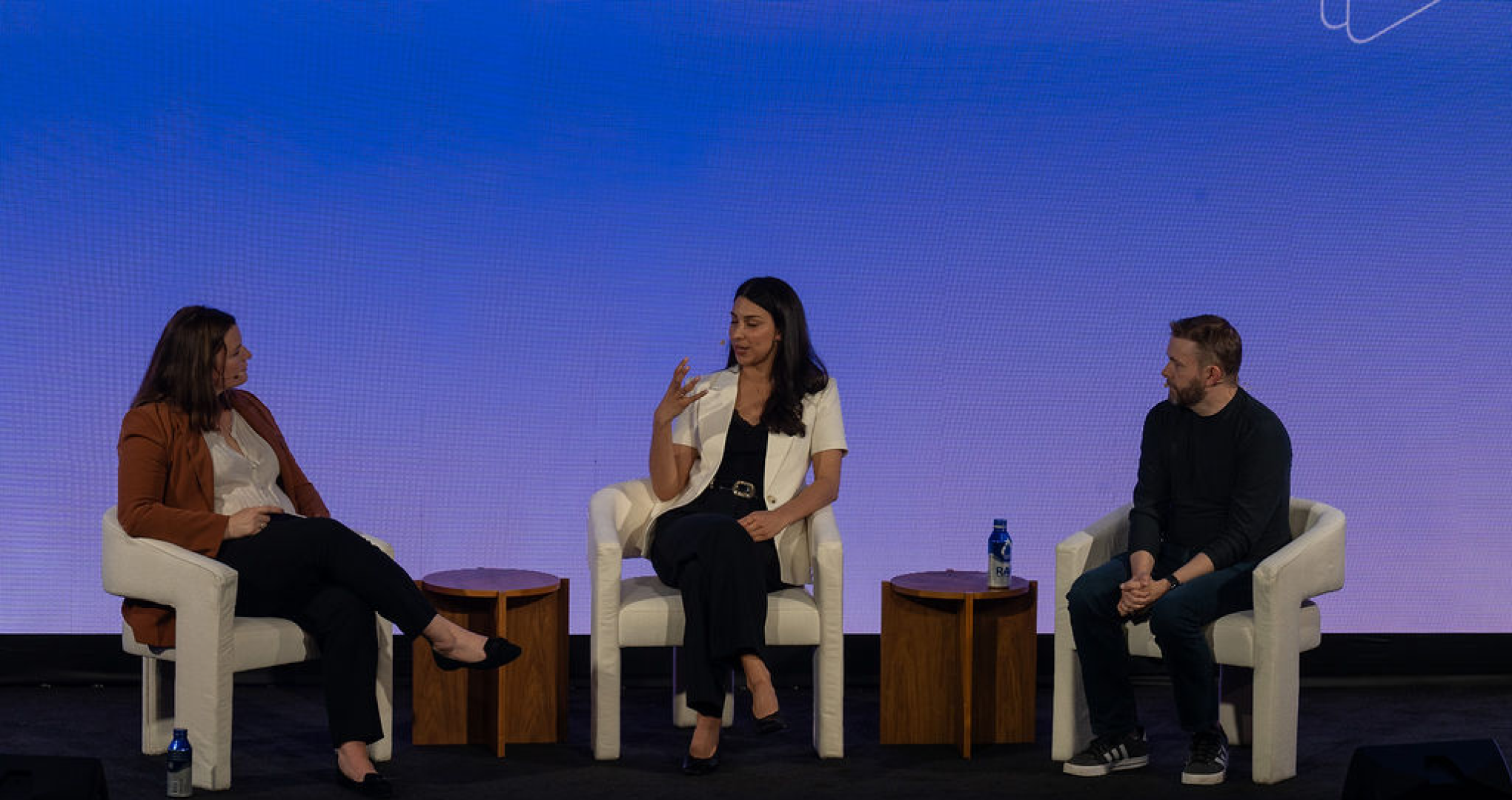
Talent Trends: A Data-Driven Discussion on the State of Hiring
Grounded in insights pulled from millions of proprietary data points, this conversation blends quantitative trends with on-the-ground perspective to help teams make sense of what the data is really signaling.
View session
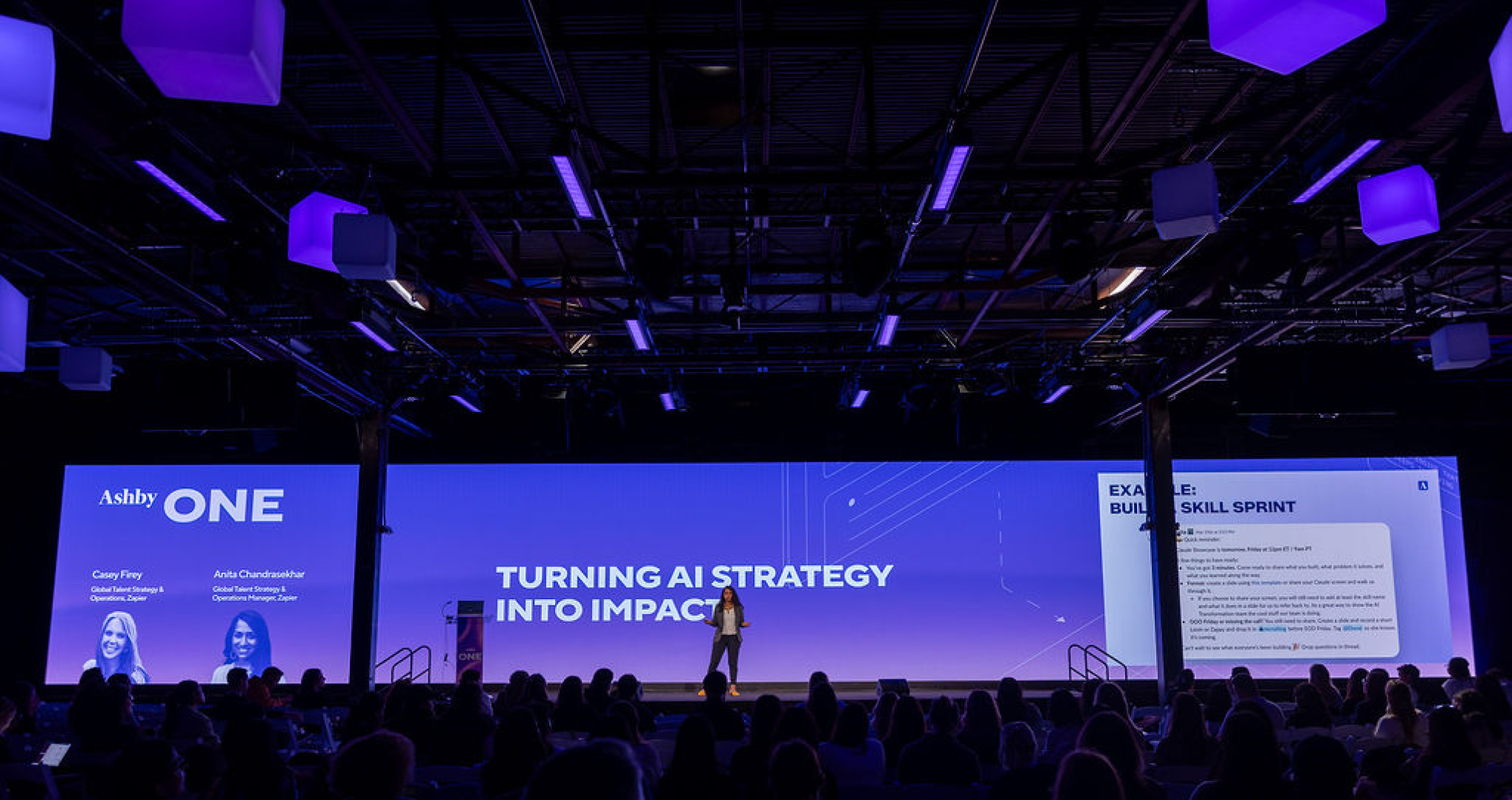
Designing for AI Impact in Talent
Inside how Zapier is operationalizing AI across Talent and People workflows, from experimentation and workflow redesign to impact measurement and adoption.
View session