Reimagining Headcount Planning as a Head of Talent
This session explores how talent leaders become strategic drivers of the headcount planning process with a tangible case study from Vanta’s Head of Talent.
Speakers


Overview
- The Role of TA in Headcount Planning
- Case Study: Vanta
- Vanta's Evolution of Headcount Planning
- The components of a great Headcount Plan
- How you know when it's working
- Audience Q&A
Transcript
Note: transcript is auto-generated, there may be typos.
[00:00:00] We're gonna talk a little bit here about, uh, my hot takes on headcount planning, and then we're going to talk to Siobhan from Vanta. So I'm looking forward to this and headcount planning. So it's one of the most fundamental responsibilities of a TA leader, and yet so often we become the recipients of the plan and we're not the architects.
[00:01:00] And the role of the head of TA is one of those positions in a company that has a truly cross-functional remit. You have the CEO, the CFO, the CHRO, the head of talent. They're generally the four roles that most companies have that pretty much, you know, you, you have that remit you can see inside every silo, and it's remarkable that we don't have that opportunity to be the architects.
We have the access and understanding of hiring data. The timelines, the capacity plans, we see the interdependencies that departments have with each other, and we can articulate the priorities, the phasing of a hiring plan, and yet the headcount plan is often delivered to us rather than us being the architects.
[00:02:00] Why? Well, first of all, headcount planning's hard. I think we'd all agree that we've struggled with this, certainly in periods of hypergrowth like 2021. And the impacts that we saw from the macroeconomic environment. Why is it so hard? Well, first of all, should it the plan, focus on the needs of the immediate situation or on your long-term strategy as a company, should the plan be top down or bottoms up?
Should it be budget based? How often should headcount planning be done? Yearly, quarterly, monthly, weekly, daily, all of the above. It often feels like that, right? We get hit with all of it. And who owns the plan? TA leaders have to be able to get a seat at the table and be part owners of that headcount plan to be effective, and that's even more critical now in the age of ai.
[00:03:00] You have to be intentional. About the deployment of technology and the impact that has on your headcount planning is quite remarkable. And I've made the mistake of mentioning ai, so now I have to have the obligatory slide about it. However, with a difference. So if you'd indulge me in an agricultural analogy, in case you don't know, that is a combine harvester, and I think we're in our combine harvester moment.
You're like, what's this guy on about? In 18 hundreds, it took an entire family a whole day to harvest their corn crop, and they had massive families back then. Now it takes one person three seconds in a combine harvester to do the same amount of work. Think about that and how it relates to how technology is being deployed within the companies you work for.
[00:04:00] We are already seeing huge spikes in productivity in TA teams from the technology that we are deploying. If you think about the different teams in your organizations, sales, customer success, all of these different departments, there is an unequal deployment of AI going on right now, and we're gonna end up in a less is more situation.
That unequal adoption means that you may have some departments whose performance is going through the roof, so you are gonna have to accelerate hiring in other teams who haven't got the automation advantages. For example, if sales are going through the roof because they've deployed AI SDRs, but your customer success team haven't got the capability to keep pace, you're gonna have to change your hiring plans on the fly.
The key elements here, what I told said at the beginning, you've got very, very few roles who see everything. So it's beholden on you as a head of ta, as a head of people, to look closely at what's going on here and to have a full understanding of how that technology's being deployed. And I mentioned the intentionality of that technology deployment.
[00:05:00] Um, Luke Eaton, somewhere around, hats off to Luke for, for this particular post a few weeks ago, but he talked about Parkinson's Law of Productivity, which is an old business concept, and that law says work will fill the available time that a person has. So if you are deploying AI technology or any other automation, that's going to save people's time.
And you haven't defined what you will do with that time saving, they will find work that fills it and that work will be work that wasn't a priority. Before your ROI will be negated because you haven't predetermined what to do with that time saving. Now, the obvious thing that you might want to do with that time saving is to reduce the number of people in those organizations.
[00:06:00] The flip reverse is you need less people to do the work that you did historically. Hands up, if you use ratios in headcount planning of people between departments, that's gonna break. It's gonna break this year because if you need far less people in sales and your customer support department is based on a ratio against the numbers of headcount in sales, you're gonna fail because your sales team is going to outstrip production and you're not gonna have enough bodies.
And you're gonna run reputational damage risk by not deploying the right people in the right balance. Planning for it. Now, planning for how you're going to reinvest that time saved, whether it's quality of work or a reduction in workforce, you have to be looking across the whole piece, and you have to be intentional with any deployment of technology, and that is now your job.
[00:07:00] It's not just about people. To be successful in a headcount plan, you've gotta operationalize the plan. That's your credibility. You've got to go into headcount planning with the outline of how you are going to operationalize hiring team capacity models, timelines, sourcing, phasing, et cetera. Do we have the capacity to interview this new workforce?
Are we going to instead have to down tools? Just to do interviewing. I have a friend at the back of the room here who used Ashby's recruiting planner to show his CTO exactly that scenario, that engineering would have to stop work for multiple months if they went ahead with the headcount plan that they designed because they didn't have enough interviewers to handle the interviewing.
[00:08:00] And at that point they realized that they needed to go to operationalize their plan in a very, very different way. Thank you, Jason. Finally. There's a loaded word in headcount planning, and that's the word target. Hands up if your recruiters have a target. Let's think about the word target. Do you actually have a target for headcount or do you have a budget?
A budget of heads, not of cash. It's a fixed number. If you incentivize your team to beat targets. You're actually incentivizing them to burn cash. Instead, you've got to focus on hiring exactly the right number of people for your business. That number's going to be ever changing in this new world we live in with the highest quality of hires.
The phrase I hit 178% of my hiring plan also reads, I burnt all of my company's cash because I failed to plan properly. Now I'd like to introduce you to somebody who never fails to plan properly. Shavonne, come and join us on the stage please.
[00:09:00] Hello everyone and thank you, Jim for. Setting the stage there for me, a lot of headcount, pains that I can relate to. So I'm super excited to be here today to talk to you guys about how we've tried to solve some of these pains at Vanta and hopefully give all of you some takeaways to bring back to improve your own processes.
So we, in recruiting, we know that we can do our app. Absolute best work when we have really clear line of sight into what the business needs delivered and when. And sometimes this means that we actually have to insert ourselves into the headcount process and in some cases, at some companies even fully drive it ourselves.
[00:10:00] Most important thing to start with is really ensuring that there's really strong communication between all the necessary groups. How often does recruiting end up as the middlemen? I always think of this actually as a very good thing. So much trust really already exists between your hiring partners and leaders and your recruiters.
Sometimes in headcount planning the business, the exec team, the finance team, they often leave out recruiting, but they'll also often leave out hiring managers and give them the updates. Last, how often have we also heard? Why was my role cut from the plan? What happened to it? Recruiting can also make sure that we're really helping to get all of the right information upfront.
[00:11:00] Outside of a course, like key common criteria like hiring manager, quarter start date level, we can really help push leaders into thinking about areas that they're maybe not thinking about today. Here's an example we saw at Vanta during our annual planning process, recruiting, received the engineering headcount plan with all the info filled in.
When I looked though all the way to the right side into the leveling column. I saw that every single level was listed as the exact same level, which was a senior software engineer. Now, I knew we wanted to hire senior engineers, but I also knew that we wanted to hire staff engineers and managers and directors and new grads.
[00:12:00] So to the two parties, building this like this made a lot of sense to them. For the ENG leaders, they knew, Hey, like I'm gonna just figure this out as I go. Like this is okay for us to work off of for now. And for finance, they were okay with this. They'd had an agreement with an engineering team that if we upleveled one role, they would down level another.
But for our team, this was a complete nightmare. After weeks and probably months actually of planning, we were getting delivered a plan that had the incorrect levels for engineering. We had to really quickly pivot and give them a bunch of feedback work through with our hiring leaders to come up with what are the right levels, and it caused a delay to kick off the quarter for us.
[00:13:00] We gave them a lot of feedback. Now they know when plans get delivered. We have to have the leveling in there. Recruiting can really also help drive prioritization. This is really key, especially if you are understaffed on capacity to start off a quarter. Really getting in there early on and helping understand how the business is prioritizing different roles and what's coming up for them is really important.
Now, this isn't an overnight change at Vanta. We're never done trying to improve this process. I've been there a year and a half, and every single quarter and year we're trying to find different ways to better plan and communicate. But here's a little bit about what we've AC accomplished through some continuous efforts over time.
[00:14:00] So what goes into making a great headcount plan? First thing I thought about when I joined is we have to make a great. Capacity model, and we have to get the right buy-in from our stakeholders. So how did we do this? We started off simply with just planning and building a V one model. We identified key metrics by gathering historical recruiter performance and data, and we developed a flexible template and model that easily accommodated different headcount scenarios, and we got buy-in from the right key like stakeholders throughout this process.
So, for example, at Vanta, we actually built into our model the concept of a buffer which hadn't seen before. This is something that we can turn on or off depending on if we think that a certain org or department is gonna have increased needs throughout the quarter. We then piloted this with a small set of stakeholders to really ensure that the model's assumptions held up.
And then we focused really on building and securing stakeholder buy-in. So we presented this initial model to our key stakeholders right from the beginning at Vanta. This was our CFO Chief People and legal Officer and our head of strategic finance. But over time, we've really made sure that we've familiarized this model with all of our hiring managers and stakeholders so that they really understand what goes into a recruiting capacity model and how does head count.
[00:15:00] Uh, impact this, we've incorporated and collected their feedback to really refine this over time and make sure that everyone understands all of the underlying assumptions and agrees with it. For example, we had built our model and added in attrition data based on historicals. I thought that felt right, but finance actually gave some really helpful feedback that this assumed that we actually then were f like backfilling 100% of the time.
Which we didn't always actually, in some works we did, and in some works we didn't. So we actually were able to adjust our model to reference the different attrition, backfill rates per department. All of this at the end of the day, was done to really help us establish a source of truth. We then integrated this model with our headcount approval system, which is Ashby.
So that became the reference for all hiring decisions, and we used this model to really plan ahead and forecast needs well in advance so we can really try to avoid last minute changes. Here's a partial example of our recruiter capacity model with dummy data, of course, and this is a simplified view, but what you're seeing here are green are manual inputs.
[00:16:00] So we plug in what's the starting headcount per department, and then we're also plugging in what are the incremental headcount asks per department, per quarter. Everything else on this model is calculated off of data that we've inputted into a different part of the model that you're not seeing here. So things like attrition, percentage assumed perce, uh, assumed attrition percentage, and the rates.
Recruiter goals, anticipated buffer, all of those data points we talked about, it's then simply calculating out how many hires should we assume, and then how many recruiters do we need to hit that goal. Now, the goal with this model for us was to create just a really simplified, but also a very interactive view for non recruiting folks, because at Vanta, our finance team drives the headcount process.
[00:17:00] So we really built this model for them. This should and could look really different though depending on who drives the headcount process at your own company. Once this is established, all of the fun recruiting work begins that we know and love so much more work goes into how can we make our teams more efficient?
How can we increase output? How do we increase pass through rates and time to hire? So we really layer this model in the data, in it with Ashby's recruiting planner, and this really helps us uncover and solve all of these questions. Next, as Jim was alluding to, you have to insert yourself into the headcount conversations.
[00:18:00] So as you start to get in there and you start, start to talk to finance, and you start to talk to hiring leaders, here's some thought starters you can use. Now, side note here is. At Vanta, we work really, really closely with our HR VPs, so we include them in these conversations and they include us. I know some orgs don't have HR VPs, and some do, but if you do, it's important to stay really aligned with them throughout this process.
As you're starting conversations with finance, some things you wanna dig into are, first of all, are we aligned on our end headcount number, something very important to get right. How will things like level and location changes, impact, budget? And also are we aligned on our process for making those changes and as changes to the plan take place, here's how it's going to impact the recruiter capacity model and the needs for my team.
And as you talk to department leaders and hiring managers, you wanna dig in on things around org design. When would incre incremental headcount trigger an additional manager? How can we get ahead of that? Understand why this role is set to a certain level or location, and how will this role impact onboarding?
[00:19:00] Do we have any single points of failure in your org? And where does this role fall into prioritization At Vanta and some of the teens, we actually have them stack rank one through 10 and what roles could wait if needed. It's also very important that you're aligning all of the different personas along the way in this process.
At Vanta, our go-to market team has the highest number of incremental changes throughout the quarter compared to our, our tech team. Probably similar for other people. In the past, as I was mentioning, we were really reactive with our headcount within go-to market and recruiting. Often we were getting in looped, looped in at the very end of the process.
After changes and requests were already made, we also uncovered recruiting and go-to-market leaders. Were thinking about some key data and some of the headcount. Things really differently. And so one thing that we uncovered was we were all thinking about quarter differently. So recruiting was viewing the approved quarter as the higher quarter.
[00:20:00] If it said Q1, we were trying to hire it in Q1. Even if it was the last day of Q1, finance viewed quarter as the start quarter. And then the go to market leaders, they did not care about quarter at all. They only cared about start dates, which unfortunately for recruiting, we weren't even tracking anywhere.
And so it was really important that we were all speaking the same language at the end of the day, and also referencing the same source of truth. It's always my nightmare to find out people have made their own copies or manual versions of a headcount tracker, which is what was happening for us. So we shifted super quickly to alignment on what did things like quarter mean, how we took our start dates from the go to market leaders and we incorporated it into the Ashby opening ID as our source of truth.
And we've established a much closer alignment with the team and set expectations that recruiting needs to be looped in ahead of time and as asks are being prepared. And we aligned at the end of the day on what some of these key criteria and definitions actually mean. So let's look at the headcount planning cycle as a whole.
[00:21:00] I think this is in the newsletter as well. Summary here is insert yourself at every single stage of the process. So again, this could look really different at your company. This is kind of how it looks at Vanta during pre-kickoff. This is where recruiting can really guide, align with your planning driver to ensure that all of the info that you are going to need to be able to successfully deliver on hiring is getting captured.
It's so much earlier. It's so much easier to get it now than to try to capture it later on and have to ask managers to fill it in during kickoff. And when parameters get sent to the business, this is where you wanna stay really informed. Start conversations with the leaders, start conversations with your people, business partners, and the planning cycle, and how are they thinking about things?
When a first version of the plan is due, this is where you wanna review. This is your first chance to, you can start asking questions. Figure out what information is missing, I guarantee something's missing. You can get an early signal on big changes or big investments that are coming to the business and understand what feedback the exec team has on the plan and why when the second plan version of the plan is due.
[00:22:00] This is really where you can help support and if you've been evolved along the, and been involved in this along the whole way, then you already have all of the context and you can really help your leaders help make edits and changes to the plan based on what you've heard. And finally at the end of the day, once the final plan is, is sent out, you're hopefully, hopefully getting a nice clean list.
And last but not least, we wanna really ensure that the work we've done is adding value to recruiting capacity in how we work with all of our stakeholders. Once we're done with the headcount planning, we can really just focus on doing our jobs to fill the headcount. But I mean, its headcount planning ever really done.
And so today, while it's definitely not perfect at Vanta, we've made a lot of great progress in switching from this very reactive process to a much more proactive approach to headcount planning and recruiter capacity as a company. The last, the, the impact of these last minute headcount changes, it became super clear.
We got rid of this very open process where leaders could add headcount at any point in the quarter, and we switched to quarterly reviews, which recruiting actually attends. At the end of the day, though we are a startup and last minute incrementals happen and changes, of course do still happen, and so when I get looped into those changes at the same time that they go to the business, that's a signal that things are in a good place.
[00:23:00] Our team also has a much, much clearer understanding in management of headcount. We use Ashby, of course, as our source of truth. My favorite saying is if it's not an Ashby, it doesn't exist set this week. And then there's some specific metrics that we like to track and measure the success of this. So we actually capture the number of headcount changes per quarter, and we break this down by incrementals, backfills, and then changes to approved head count.
So we're tracking how often they're changing level and, and location and things like that. We also have a goal for our team's breakdown of full-time recruiters versus contractors. And when we're high on the temporary support side, it's usually a signal to us that we've had to overindex on last minute, temporary support versus really being able to invest in full-time, long-term sustained recruiters on the team.
[00:24:00] And then we also measure cross-functional feedback through an interdepartmental survey. This helps us really understand even beyond headcount planning. How do our cross-functional partners, like the hrps and hiring managers in finance feel about their partnership working with recruiting? So at the end of the day, how do you know when all of this is working?
If you can answer yes, these questions, you're probably in a good place. You wanna know, are your stakeholders happy with this process? And most importantly, are you happy with this process? Is the plan locked and loaded on the first day of the quarter, or better yet, a few weeks ahead of the quarter, and based on historical data, at the end of the day, do you have enough people on your team to hit these goals?
Now, headcount planning's not easy, and it can be tough to insert ourselves sometimes into these conversations. But we as recruiters, we're often in the best position to really help connect all of these moving pieces and personas. So with that, I'm gonna welcome Jim back up to the stage for some q and a
great job you wanna take.
Oh, nice to say. I've got a question for you before we get any from the audience. What's the latest you got your hiring plan for the year? Oh, um, maybe worse than latest, but I've definitely been places where there wasn't even a headcount plan. And recruiting was taking information that we were receiving from hind manages about roles and we had to build like a tracker and a source of truth.
[00:25:00] What's the latest you've gotten it? There's some people in the room will remember 2010, I think we got the plan in October. Oh. And with a 65 day time to fill. You haven't got much time to hit the 15,000 heads that you needed to get, knock in something ridiculous back then. Yeah. Um, do we have any questions from the audience?
There is a roaming mic going around, um, like throw stuff at us. This is a great opportunity for everyone to kind of live different experiences and think about things in a different way. It really is a new world we're going into. Hi there, from behind the pole. Um, that was fantastic. Thank you so much. Um, we, my company has just experienced a rapid period of growth and now we're stabilizing a bit.
So I can see myself personally, selfishly adding a lot of value by using this. Downish time to completely revamp our entire headcount planning process. So thank you. Um, my question for you, um, specifically pertains to your example around your engineering team where they came to you and all of the levels were the same, um, very familiar.
[00:26:00] Um, so how did you actually go about helping them help you understand the real breakdown of like the granular, like actual levels needed? Because. I wanna be more helpful to my HMS and like helping them forecast these things, but I feel like I don't always know the right questions to ask to help them help themselves.
So, yeah, that's kind of my question. Yeah, I mean, I, I think at Vanta we're very lucky. We have. Really, really great hrps. So they're definitely deeply involved in the process. But I think with engineering, I mean, data speaks to all leaders, but with ENG leaders data really, really speaks, and so outlining for them the differences bet between hiring a new grad engineer and a.
[00:27:00] Senior engineer and a staff engineer versus a manager and director and time to fill and pass through rates. Like really showcase like why it was so important for us to have a really good lens as early as possible. And we saw, we saw the effects of this. We were very far behind in the start of the quarter because of this.
And fast forward a few quarters later when we walk into the quarter with everything laid out, they can now see the difference. When we have the headcount plan ready. So I think with leaders it's real, especially in engineering, speaking the data and like leveraging Ashby or whatever tool, hopefully everyone heres using Ashby.
But um, and just showcasing the differences in hiring that it takes and why that's such a big impact if you don't have it set up. I dunno if you have anything. Yeah, absolutely. It, it's key that you can articulate that you need to partition your resources. So that you've got people focusing on those hard to fill roles, the staff, the principal positions.
'cause otherwise they'll get left to a last Yep. And then you end up in a desperation situation. And, and desperation breeds mistakes. Yep. In all walks in life. Are there any other questions? Don't be shy. Hello Tony. There's a mic coming your way. Thanks. Um, so.
[00:28:00] Love the plan. Thank you so much. Um, I've, I've, I've been lucky to have thought in kind of the same space, and so it really resonated where like the capacity plan kind of dictates the head count headcount plan, but, um, with tools like Ashby, I'm, so in your headcount plan, in the math, I saw average recruiter, and so you're thinking about historically speaking, how many hires can I make per recruiter per month, per quarter.
But in the last couple months, I've seen tools like Ashby accelerate or. Um, simplify or allow recruiters to do more with less. And so how are you adjusting or thinking about AI and capacity planning? Like for example, in the last 45 days, two of my recruiters hired 60 people, totally broke my capacity plan.
[00:29:00] And now like, am I overstaffed or, you know, so how are you thinking about that in your future capacity plans? Yeah. We try to build our capacity plan well. I, I think we try to make it really adaptable, like I was saying. And so we, we revisit it quarterly, sometimes even more than quarterly to see how has recruiter output changed and increased, how has headcount changed?
And so actually right now we adjusted our plan on engineering. Specifically, we're starting to invest in sourcing and we never had sourcers. We're starting to add a ratio of recruiter to sourcer, and so we built out in the plan Okay. As. Sourcers join, we think recruiter output is going to increase. And so recruiter goals should be able to go up.
[00:30:00] And here's, we've made a lot of assumptions on it, so we built that into the plan as well. Um, so I think we just try to keep the plan really like adaptable and flexible, but we revisit it often. It's like even if we set it in stone at the be end of the quarter, we, we will go back to it often to see how things have changed.
That answers. Yeah, we we're looking at things in exactly the same way. The, uh, the, the buffers that we build in actually protect us against that overcapacity downstream. And by continuously reviewing that against the results of the business, uh, as we see the business accelerate, we know we need to hire more people.
We're not necessarily tying that into time. We instead anchoring the triggers for the headcount plan on the business outcomes. So in effect, it becomes a revenue per hire across multiple different functions outside of sales. We keep sales isolated. Therefore, it's not a strategy of hope. The sales can go off and and sell as much as they possibly can.
[00:31:00] We build the rest of the business out behind that. Then I'm constantly watching the recruiter productivity against those pieces and then projecting in the future in partnership with finance. Here's, this is the tipping point for us. We expected to need to add a new recruiter to go to market. At this point in revenue.
We now think we can stretch that by 5 million, 10 million, whatever it happens to be as a number. Thanks to the productivity gains we're getting from both systems and process, and Anna and I will talk about that later on in the final session this afternoon and give some illustrations, uh, around how we think about those intersections there.
I'll add one more thing maybe too, which is I think RPO models have made a comeback, at least in my mind. Um, and I think it's 'cause a lot of businesses wanna maintain some flexibility on their team because. Headcount does fluctuate so much. So for us, we work with, um, this one company and have recruiters on loan quarterly basically.
[00:32:00] And so that gives us some room as like headcount increases or decreases or unsure what it's gonna look like in six to nine months. Like we have a little bit of flexibility on the team still, which is good. Any other questions? We have one over here. Keeping John Fit, this is great. If we could have a question from that side of the room afterwards, that would be fantastic.
I, um, I am a brand new Ashby customer. We just signed on April 30th. And, um, one of the, this is actually a really irrelevant question, but here we are. Um, I really enjoyed your quote, like. I was raised in an agency, so it was like, if it's not in the system, it didn't happen. So if it's not in Ashby, it doesn't exist.
[00:33:00] I like that a lot. Could you talk a little bit about the cultural aspect that you promulgate in your team? I. So that that rule actually happens. Yeah, it's, it's, it sounds, it's definitely easier said than done. Like I used it this week because we had a leader who thought that they had some headcount and they had some other version of the plan they'd made a copy of.
But we tried to really make sure from the start when leaders join and hiring managers join and recruiters join, make it really clear like. We do have a source of truth here. It's Ashby. This is where our headcount lives, and we have a very robust process in place where when finance actually approves our headcount, we load it into our system.
[00:34:00] We know how long it's gonna take to show up. We have this like hiring tracker. It lands on. And the hiring managers all have access to that, and it's live in real time. And so, uh, we just try to really instill that from the start. And I think it even, it goes all the way back to like, recruiting has to be in headcount, convos, recruiting has to have a seat at the table so that when you make those statements and you push those initiatives and you want that culture and structure, like the team listens to you and trusts you on that.
So it goes farther back in, in getting that seat that sometimes you have to push for. Um, but yeah, we try to instill it from the start. I would say, uh, one of my favorite pieces of functionality are the custom fields that you can add to openings. So if you use openings for headcount in Ashby, it creates the table of all of your headcount.
And we plan our headcount 18 months out. But again, we're not really thinking about time. We're talking, thinking about business outcomes that then trigger these things. So one of my custom data fields in there is an ar r threshold. To trigger the headcount to open as a release to recruiting, and that lives in the openings piece.
There is a tick box to sell. Tell my sourcing organization, do I want sourcing support on this? And in effect, what we're doing there by hosting all of the instructional information in the opening section is making that even more valuable so that the teams want to go there, want to use it, want to make sure that they're.
[00:35:00] Future heads are, are all reflected there correctly. And it's open, transparent access. Everybody can see what's happening in the future. And you know, one example, we, we do proactive sourcing ahead of a role opening and we create the projects, the pipeline for that position rather than being reactive to a job that was difficult to fill.
And again, we'll, we'll talk a bit about that in the hiring excellence session later.
Tom? No, the mic's coming your way.
Um, I'm curious what metrics, uh, you found most effective in gaining buy-in from finance and executive teams during the planning cycle? Um, and I'm particularly curious about, from like a direct to consumer, uh, product instead of having sales teams where, uh, revenue will then incre or release headcount.
[00:36:00] What have you seen? Well, I mean, direct to consumer, but, um, I, I recognize the impact that you, you've got a lack of predictability in business outcome potentially there. Um, but those things are going to happen and it's probably even more disconnected from timelines. So if anyone hasn't figured it out yet, I hate quarterly hiring plans.
Right. To me, what we've done is we've taken a business plan, we've applied time to it so we can see velocity. Then we've taken the business plan away, kept the time element, and then applied headcount planning to it. And that's how we keep making all these mistakes in, in headcount planning, stick to the business outcomes, and have that as the anchor and the trigger.
So in your world, in a B2C environment, you've got the business either doing exceptionally well or not. And it's building in these feedback loops into the structure in partnership with finance. So, you know, touching on it earlier, you've got an a RR threshold for a new role to open. Or a, a revenue threshold for, for you.
[00:37:00] And if that never gets hit, that head doesn't get open. So you're not spending the cash, you're keeping the company money. But if the, if we have another macroeconomic situation where there's a downturn, that becomes a feedback loop against attrition. And you talked about, um, not back filling a hundred percent of roles if you've tipped below the next threshold down.
It actually means there's no emotion in the conversation around Remi, not backfilling that attrition and your business is rebalancing with a micro lever of not utilizing attrition. Um, I go back if some of the Randy Hi. Um, we actually modeled this at full story post, some layoffs that we had in, in 2022 went back in time and we looked at how would headcount planning have been different had we anchored on a revenue model.
And we figured out that the attrition backfills would've bought us in, and meaning we wouldn't have had to have laid off a, a certain number of people because the roles wouldn't have been existed and they would never have been hired. Uh, and, and all of a sudden, like, you have this partnership with finance, and they're like, ah, I understand the levers that you're using here.
[00:38:00] I recognize the patterns. We've never applied it to headcount planning, but when we do, and we can build the calculations, Shane, our head of finance and I, we have a. Load of fun with this and making it extremely predictable. Uh, and that's, that's the concept there, regardless of the underlying business. You have any No, I, I would echo that and I think just, it's just like, goes back to like automating as much of the process as possible and like predicting versus like being in this really reactive state.
Yeah.
Hi, we've got one, that one here. Cool. Hi there. Um, my question is, what recommendations or advice would you give first time managers playing a role in headcount planning? Selfish question. First time TA managers. Yeah, first time TA managers. It's all about questions. Um, and I didn't, I actually had some questions as examples on my slide, but it didn't scroll up fast enough and I forgot to mention them.
[00:39:00] But actually inserting yourself into the planning and asking really open questions. Uh, based on a lot of what we talked about here, what feedback loops have we built into the headcount plan to avoid an over hiring situation if the business doesn't do as well as expected? What plans have we put in place that align with the deployment of technology to make sure that we don't add humans and technology to a particular silo that causes a business imbalance?
You are in one of these, uh, delightful seats that you can ask these questions. People won't have thought about them, and all of a sudden they're like bringing you in the phasing, the interdependencies. We need to have the scaffolding in place. The line managers, the enablement teams, those are the structural roles that set future hires up for success.
[00:40:00] It's your job to ask those questions and make sure that stuff's in place. Um, and the moment you start doing that, you'll be invited in and welcomed into all of those conversations and you might regret it, but it, it's a good thing. I would also say make friends with finance. Like, I mean, usually they're, they're a big part of the process and if you can find your.
Your person in the finance team, just making sure, I mean both, both of your roles interact so closely. If you're both successful, it's, it's better for everybody. So I think that's really important. I think also like figure out what sticks for your leaders. So outside of like all the data we talked about, I found at Vanta, for example, like RC Suite, they really liked benchmarks.
They really liked understanding, you know, what did, not necessarily competitors, but other companies we really looked up to or were similar size or stage. How big is their recruiting team? What ratios do they use, what's their process like? Anything that you can use around benchmarks stuck for us, that doesn't work for everybody, but you can kind of figure out how, what is your C-suite like to see and, and what sticks for them.
I think we've got one more question and then we're gonna be time cut now.
Key Takeaways
- TA leaders have unique access to hiring data and cross-functional insights - use this to drive the headcount plan, not just execute it
- Traditional department ratios will fail as AI creates unequal productivity gains - build flexible models that adapt to technology deployment
- Create adaptable frameworks using historical data that can handle unpredictable hiring surges and changing business needs
- Participate in every stage of headcount planning, from pre-kickoff to final approval - don't wait to be invited to the conversation
- Anchor headcount decisions on revenue thresholds and business metrics rather than arbitrary quarterly schedules
- Use your ATS as the definitive headcount reference to prevent shadow planning and miscommunication
- Plan for interviewer bandwidth and focus on hiring the right number of people, not beating targets that burn cash
Recommended Sessions
Product Fireside Chats: Influencing the Business with Data
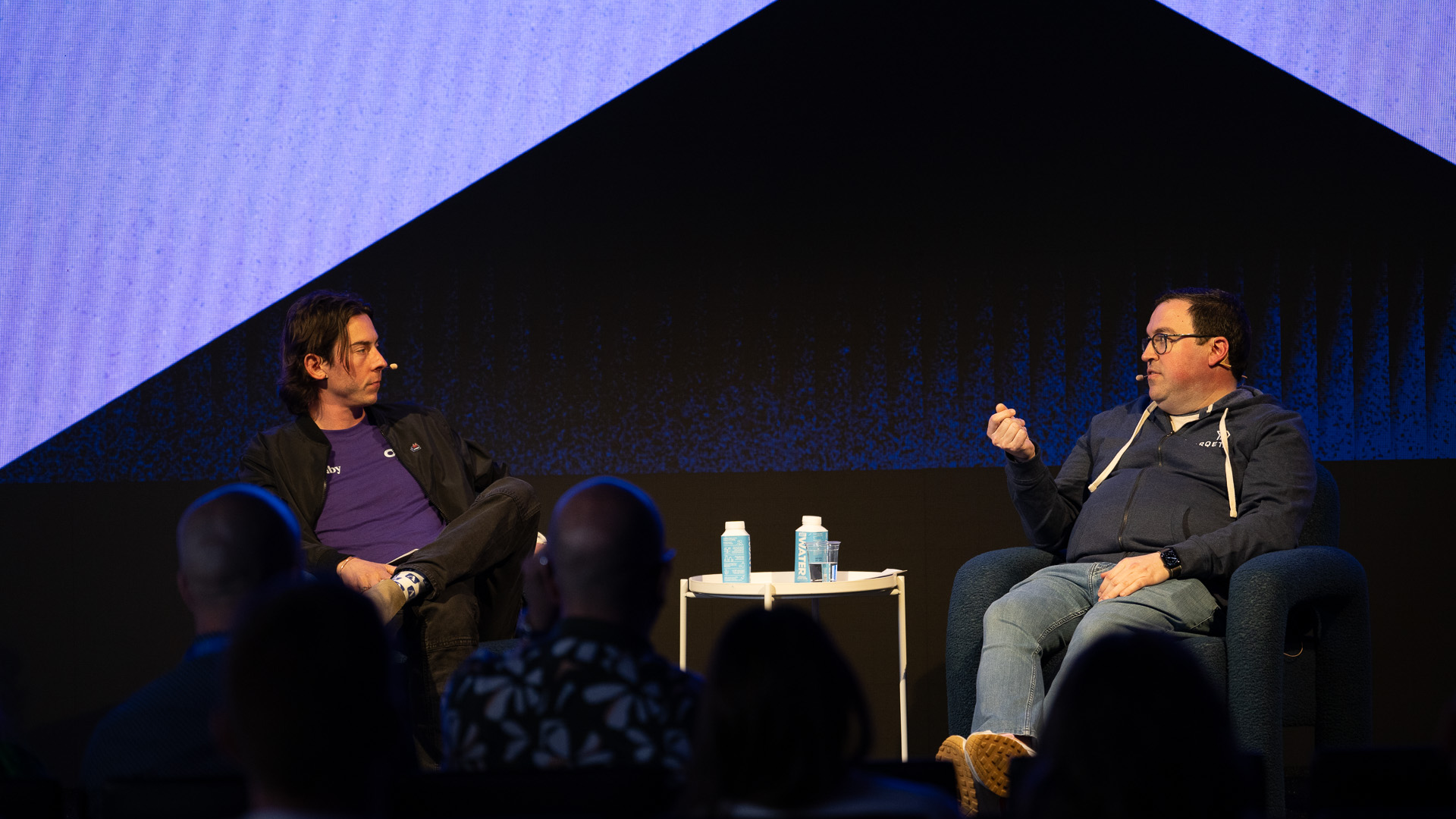
Join Dan Seifert, Director of Talent Acquisition at Marqeta, as he explores how recruiting teams can use data and reporting to influence their organizations strategically.
View session

Talent Trends: A Data-Driven Discussion on the State of Hiring
Join talent and data experts from Notion, HackerOne, and Ashby for a dialogue on the latest changes in the industry. The conversation will center around insights pulled from millions of proprietary data points, providing both quantitative and quality perspective.
View session