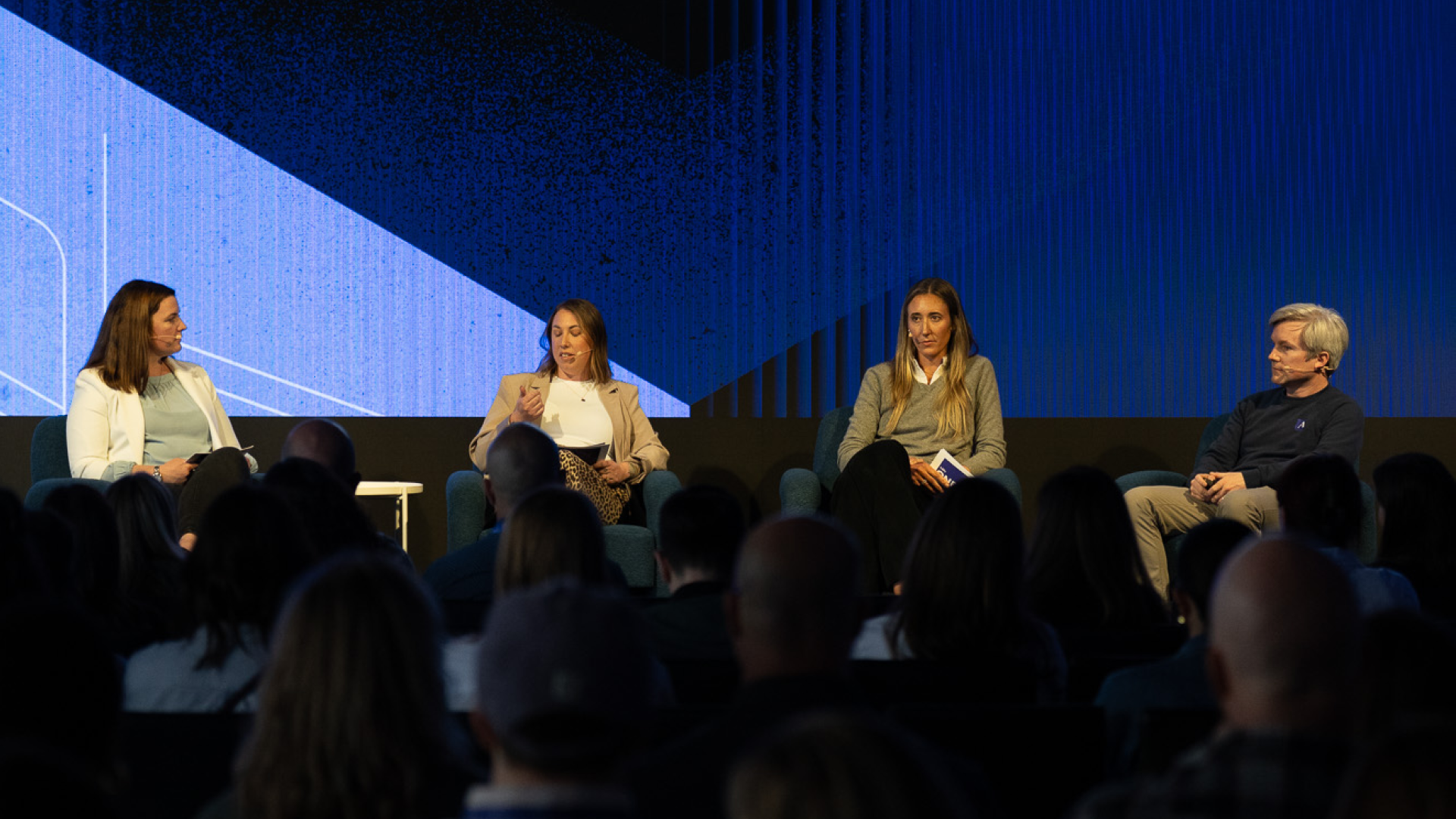
Talent Trends: A Data-Driven Discussion on the State of Hiring
Join talent and data experts from Notion, HackerOne, and Ashby for a dialogue on the latest changes in the industry. The conversation will center around insights pulled from millions of proprietary data points, providing both quantitative and quality perspective.
Speakers



Overview
- Recruiter Productivity: Increased Inbound Application Volume and Interviews per Hire
- Candidate Experience Surveys: Candidate NPS
- An Employer's Market: Offer Acceptance Rates
Transcript
Note: transcript is auto-generated, there may be typos.
[00:00:00] Kevin Connolly: Ground, uh, unopinionated people. And so what that means is the score actually goes from positive 100 to negative 100, which is an odd thing. So very pragmatic example of everybody loved the experience you have a hundred percent of people loved it, minus zero, that's a positive 100. If everybody hated the experience, that's zero minus 100.
Kevin Connolly: So you get a negative 100 scale. One thing to derive from that is a positive score means there's more people that enjoyed the process than not so positive. One is in the good side of things to begin with, but ideally you get a little bit higher than that and do as best as you can. It's virtually impossible to get a 100.
Kevin Connolly: There's always somebody that's upset about something for some reason, might be moderately upset, so. Naturally you have to read through things and understand the context of the answers given, look at the details. Um, but zooming out from NPS before we get into some of the data around it, I would say that in Ashby you can customize
[00:01:00] Kevin Connolly: your candidate experience surveys.
Kevin Connolly: You should, you should think about what matters to you and your team. MPS is a great place to start for benchmarking and thinking about things overall as one number, but it's not the end of the story. Uh, so just some references. If we look at our customer base. We actually have a really great, um, average NPS, which is 37, like people that use Ashby, go through the Ashby experience, tend to be pretty happy.
Kevin Connolly: Um, and if you looked at NPS for other products. Not just ATSs, it's like hard to even get into the upper tens of a score. Uh, but today we have two companies that are like exceptional on that score, both Hacker One and Notion with the 60 ish score. So they're gonna tell us a little bit about how they, they achieve that.
Kevin Connolly: Um, but before we dive into their, their sort of stories and perspective, share one chart here, which is again, it's one number. And whenever you're dealing with one number, you run a little bit of a risk of like, well, how do you segment that? Break it down. What's going on underneath the hood? Is there context you need to pay attention to?
Kevin Connolly: So
[00:02:00] Kevin Connolly: this is an example of breaking NPS down by the furthest stage reached. And so over at the right, if you sample somebody's NPS, when they get hired, you probably bet they're gonna be pretty happy. You know, they had a good experience. They like the team, they decided to work with you. So there's a, you could call it a bias towards positive if you.
Kevin Connolly: Reject somebody immediately. They do one screen or maybe not even get a screen. I've seen that happen. You just reject after application and send an NPS score or survey. Not exactly recommended, but you might be a little bit lower. And that's what we actually see a trend as people go through more. The process, it tends to be a little bit higher, but this is just one example of showing that if you segment things, you might be able to think about what you can improve, where you can improve it, why you need to improve it.
Kevin Connolly: Um, you know, it could be by department, it could be by recruiter, it could be by manager. It could be by any number of features. So if you wanna get tactical, you can, you can start from the single number and know if you're in a ballpark good place. But then you can pick things apart and you might even have a great score, but some areas that need improvement.
Kevin Connolly: But with that, pass it back to you, Kelsey.
[00:03:00] Kelsey Peterson: Thanks for sharing that. So, Kate, your candidate NPS is over 59. What are your non-negotiables and the candidate journey that you believe drive this high score?
Kate Taylor: Yeah, I think for us, um, we just try to remember that candidates are humans and they're people. I think it's easy in recruiting to think everyone's just part of a dashboard, part of a funnel, and you wanna move people through.
Kate Taylor: Um, but it's those relationships that differentiate whether people join or not. Um, and so through the process, how do we actually create those like genuine relationships, whether that's through, like getting each other on text, learning about what's important to them. And then giving them kind of gifts or mementos through the process that help them remember that we are really getting to know them.
Kate Taylor: Um, and I love seeing those, whether it's like we have candidates in the process who are going through like the gift of a, a baby in the process and it's sending them kind of a gift for that, or knowing their favorite restaurant or something that's happening within their family. I've seen people going through surgery and getting gifts for that.
Kate Taylor: Like we really wanna get to know people. Um, and ultimately we think that that drives a lot of decision making.
[00:04:00] Kate Taylor: Is that. They feel connected, um, to how we work at Notion. Um, and for us, like we hire on two dimensions, which is best in craft and aligned with our values. Um, and for us, the recruiting craft there, um, is really, really important.
Kate Taylor: Um, we wanna make sure that we're driving that interaction and that experience all the way through. Um, so that for us, I think has driven a lot of what wire engagement is high, um, and will continue to be. So we wanna be really kind and direct with people through the process and just have that genuine relationship.
Kate Taylor: I.
Kelsey Peterson: The recruiting as a craft concept you had shared before and I think it probably resonates with a lot of folks in this room. I'm curious, when you're onboarding new people, new recruiters specifically, how are you acclimating them to that mindset?
Kate Taylor: Yeah, so we have a document internally called How Notion Hires, um, and it goes down to our hiring philosophy.
Kate Taylor: Um, we spend a lot of time with our founders sharing more about how Notion hires and why. Hiring a notion is one of the most important things that you can do at the company, and I think recruiters take a lot of pride in that. Um, we
[00:05:00] Kate Taylor: actually have one coming up next week, we call it Firesides with Ivan. Um, and he shares more about why recruiting is like the most leverage activity for anyone at the company.
Kate Taylor: Um, and I think that's like really special and core to recruiters. I think they feel pride, they feel excited to join. Um, and we like to share that when we hire recruiters 'cause it's very special to work somewhere where they really care about recruiting and think it's, again, one of the biggest levers that we can have at a company.
Kate Taylor: That's, that's amazing.
Kelsey Peterson: Wonderful. Now Kayla, actually as a clarification, the score said 63 as of late. Your average NPS is 64. We wanna rob you up that one point. Um, I'm curious, you also, we just talked that you're doing triple hiring volume of average and you have an NPS that high. I think people are really curious how you're achieving that.
[00:06:00] Michaela Ricketts: Yeah. So, um, I'm embarrassed to say three years ago we, on the Glassdoor on the interviews, we had 73% negative interview score. Um, and that didn't align with our values. Respectful people was one of our values. So that was something that we.
Michaela Ricketts: Really identified that we needed to drive change in. So we decided we wanted to implement SLAs and KPIs to drive the right behaviors around candidate experience.
Michaela Ricketts: We joined the circle back initiative, which is an initiative where you are always finishing that loop with the candidates. So always getting back to candidates and offering them phone calls with feedback. So that was a priority for us. Um, the SLAs that we implemented were, um, 10 days for application review.
Michaela Ricketts: And again, feedback on the telephone offering that not everybody wants that, right? Some people want it in an email, but the offer of it at least. Um, and we moved away from those KPIs now because it's really kind of been fundamentally set within the team. From 2022, our NPS was 50, and obviously it's at 64 today.
Michaela Ricketts: And now on Glassdoor we have 78% positive reviews. So I really
[00:07:00] Michaela Ricketts: believe it set the foundations, um, aligning with our values, what we believe in, to really stay in touch with those candidates. Um, also the structured interviewing really helped because we are able to prep a candidate for every single stage.
Michaela Ricketts: Give them the talking points, give them some, uh, suggested questions. And it's really helped with the alignment of the process.
Kelsey Peterson: Being able to offer live feedback to everybody whom you interview is incredible. As part of that circle back campaign, when you were instituting that, did you receive pushback internally around folks being too busy or any concerns around how people might take that feedback?
Michaela Ricketts: It was during a quarter period, so we implemented that towards the end of 2022, which was obviously around the tech layoff times. So we were definitely quieter, and as I said, we take those opportunities to be able to implement. Those, um, opportunities that we see. Um, now it's a little bit harder with the amount of hires that we're doing.
Michaela Ricketts: Um, but like I said, the fundamentals are still there.
[00:08:00] Michaela Ricketts:
Kelsey Peterson: That's wonderful. And how would you define a human candidate experience in today's hiring environment? I.
Michaela Ricketts: Yeah, I, I want candidates to see us as their champion. Like recruiters get a lot of stick. You see it on LinkedIn all the time. Bad experiences. We want them to see us as we add value to their process and we've really helped them through that.
Kelsey Peterson: Wonderful. I'm going to pivot us. This is Swift to our final topic of the day. Kevin, can we chat a little bit about the employers market?
Kevin Connolly: Yeah, sure. I'd be glad to take over here. Let's see. So on this topic, uh, employers market, you know, basically could boil it down to offer acceptance rate in one view.
Kevin Connolly: Like is it high or is it low? If candidates have a lot of options, even if they loved your experience, what you have to, to offer them, uh, they've got choices and they might reject at a higher rate your offers. So if we look at this chart, the bar chart shows the relative offer volume over time. I'm gonna try and point over it.
Kevin Connolly: And
[00:09:00] Kevin Connolly: Q2 2222 is that peak. That's sort of the exuberance of hiring, funding growth. And then the sort of precipitous fall and the offer volume there means people are pulling back, offers, maybe reneging them. Um, people are less likely to, uh, um, open a bunch of headcount when funding is not, um, on the horizon.
Kevin Connolly: And so we see right before that, at the top of that peak, the offer acceptance rate is actually the lowest. That's what you see there. And so there's a lot of options, a lot of offers going around. And then you see, as the offers disappear, the offer acceptance rate starts to creep up, and that's when it starts to become an employer's market.
Kevin Connolly: We also know from our prior charts that inbound goes through the roof. There's a lot of unfortunate, um, rifts layoffs, a lot of talent on the market looking for roles. And then the focus on inbound hiring picks up. We could break this apart a little bit more, again, go into our sort of classification of business roles versus technical roles.
Kevin Connolly: And I don't know how
[00:10:00] Kevin Connolly: quite to interpret this, but it stands out as the, the technical roles really, really had, uh, a lot of the variation. Um, this might be driven by technical engineering type hiring, but it's like a 10 point spread between engineering offer acceptance rates being very low when there's a lot of demand and growth happening to coming up, you know, 10 points to a new baseline and to where we are basically today.
Kevin Connolly: Um, so much like MPS in the sense you can start with one number, like an offer acceptance rate, and you can start to segment it out and look for trends and look for differences. I generally recommend that as a data person, you know, to start looking at the underlying features which might reveal more interesting information.
Kevin Connolly: So on that theme, the last chart we have here is just the rollup offer acceptance rate split. Another way, which is by industry. So you might hear like a, a best offer acceptance rate being bandied about and shared. But even if you just look at different industries, you can see about a 10 point
[00:11:00] Kevin Connolly: spread and you can find yourself, maybe you're in healthcare, maybe you're in finance.
Kevin Connolly: Um, your starting point just to get, you know, triangulated, where, where do we stand on our general offer acceptance rate? Maybe you can use something like this, but I would always recommend starting to, to dig into the details and segment. Of course, jobs, seniority role, um, would be another factor which might influence the offer acceptance rate and such.
Kevin Connolly: But with that, Kelsey, I'll pass it back to you.
Kelsey Peterson: So we just kind of saw differences among industries, differences among role types. Kayla, you had shared that for customer success and marketing, it was very much an employer's market at Hacker One, but maybe for engineering, it seems to be candidate led. How does that show up?
Kelsey Peterson: What does that look like?
Michaela Ricketts: Yeah, so for our non-technical roles are time to fill us around 40 days. I. With engineering, it's creeping up every day at the moment. So we are sitting at 111 days for engineering. I think a big part of this is Hacker One, like every company is looking to adopt ai. So when we are hiring engineers, we want 'em to have data or AI
[00:12:00] Michaela Ricketts: experience.
Michaela Ricketts: So we are having to be much more strategic, um, for the, um, engineering roles and some of the technical roles, and really have to focus and prioritize that time on sourcing Now.
Kelsey Peterson: And how are you thinking about prioritizing sourcing? Like what does that look like?
Michaela Ricketts: Yeah, so we've mapped the markets. So we hire in hubs.
Michaela Ricketts: We've really mapped the markets to understand what the competitors, um, look like in those markets. So what their salaries are. Um, you know, which sort of companies tend to do counteroffers when it gets towards the end of the process with the candidate. We are aligning with the candidates really early on and trying to understand whether they.
Michaela Ricketts: Um, want to essentially, um, work for a scale up or whether they want big corporate and just understand what motivates them and if we have a chance of actually closing them at the end of the process. And, um, we obviously using data to influence as well, but I. Further from that with regards to the sourcing, we are having sourcing parties on the team so we identify critical hard to fill roles,
[00:13:00] Michaela Ricketts: stick some music on, have an hour call and say we want 75 candidates in this project by the end of the call.
Michaela Ricketts: And then we'll also do asy off line sourcing projects. So again, we'll identify critical roles. All the engineers will have a, um, all the recruiters, sorry, will have a target to add candidates into that project and we're making hires of it. One just went through today as well. So I think it's really great to get some teamwork and some different perspectives.
Michaela Ricketts: I.
Kelsey Peterson: That's wonderful. I'm curious, what's the, what is the distinction between sort of the live sourcing party and the async? What are you seeing as distinctions among them?
Michaela Ricketts: Yeah, so I've worked at companies before where we've done sourcing parties and people just wouldn't turn up and they weren't really engaged, but our recruiters really enjoy it.
Michaela Ricketts: And I think they get a variety of, first of all, working together because we're across so many different time zones. It's actually that time to collaborate and do it together. Um, and the async ones are just like, Hey, if you have a couple of hours here, I'd like you to do this.
Kelsey Peterson: That makes sense. I'm gonna pivot us a little bit.
Kelsey Peterson: Um,
[00:14:00] Kelsey Peterson: Kate, you had shared previously when we were chatting the interview scores are not always predictive of performance. I think maybe that resonates with some folks here. What does quality of hire look like for you now and how are you thinking about redefining it?
Kate Taylor: Yeah, so we, we don't have like fancy surveys.
Kate Taylor: We send hiring managers. Um, we're looking at it, but maybe not calling it a survey, like something more, I don't know, notioning, we'll figure that out. Um, but what we do do is every six months or so we are looking at, uh, we assign kind of scores against, um, interviews. So looking at kind of what their rating was in the interview.
Kate Taylor: And then we look at their performance, um, and we have a performance rating system. We kind of cross those and then we look at how are people actually performing based on what we thought they were gonna perform like in the interview. Um, and I think that's really helping us reshape how we target and go after for our sourcing efforts.
Kate Taylor: Um, folks will be successful at Notion. I know I'm guessing many of you're in companies that are growing and changing. I feel like Notion continues to evolve Every few
[00:15:00] Kate Taylor: months. We have new ways. We think about things, new things we're shipping. And so that will shift talent profile. And so we need to stay on the cutting edge, um, of who is able to be successful at Notion, what skills and things they bring to the table, and then how do we adapt that from the recruiting side.
Kate Taylor: Um, and because we do view sourcing as an art for us, um, our recruiters spend a lot of time taking that and actually going after people who we think will be successful. So it's not just only like calibrating those scores internally. Um, but it's also kind of meeting with hiring managers and understanding.
Kate Taylor: What skills they're looking for and how do we pivot that in recruiting? Um, I think to the controversial part, there are like situations sometimes where you find people aren't calibrated on what they're looking for, and those debriefs are really that time when recruiting gets to ask those pointed questions.
Kate Taylor: Sometimes a no, if you actually read the scorecard, it's actually a yes, um, or the inverse, right? Like you have to spend some time going through the scorecard and asking detailed questions. You can't just take it for face value. Um, and often those candidates who might have kind
[00:16:00] Kate Taylor: of controversial feedback, it's actually not that they wouldn't be successful, but maybe they have an area that they might need extra support in.
Kate Taylor: Um, and that manager spikes in the area. So it's actually a great person to hire. So I love that debriefs for us are actually like a must do in a time when recruiters get to flex their skills as like thoughtful business partners. Um, and so rarely do I ever see a canceled debrief. We use it as a time to calibrate even if there are all no scorecards.
Kate Taylor: Um, sometimes they get canceled, but most of the time they don't. Um, and I think that's, it's just a really special time for us as a team.
Kelsey Peterson: I agree. The debriefs I have, I think maybe many of us have experienced this. Like you can see a wall of threes and green and you're feeling good going into the debrief and things shift.
Kelsey Peterson: They're very important.
Kate Taylor: Yeah.
Kelsey Peterson: This is very tactical, but I'm curious when you're doing this quality of hire analysis, anything surprised you? Like any tidbits you've gleaned around profiles that are different than you expected?
Kate Taylor: Yeah, I would say like on the whole people from big companies do well at Notion.
Kate Taylor: That was like a surprising one for me. Um,
[00:17:00] Kate Taylor: like in terms of like where we pull people from, um, which was I think, surprising. I think we thought, okay, like early startup, DNA, um, that's not like, that's just kind of a generalist trend that we saw. Um, we also looked at like where, like what types of kind of work that people were doing before.
Kate Taylor: A lot of people sometimes. Um, had like large support teams that were working with them to get their work done, and we're always like very focused on staying scrappy. Um, and so even at the leadership level, we all have ic. The icy mentality running through our veins. That'd be another one. I'd say, sorry. We often find that like strong kind of icy energy is really like part of how Notion operates.
Kate Taylor: Um, and we expect managers to do a fair amount of Cy work themselves and I think it's something they lean into. That was an another interesting one.
Kelsey Peterson: That makes sense. Maybe a final question for us. You both are working with different models, certainly different growth stages. What is something through connecting today, and we chatted a few weeks ago, that you have learned from each other's approach.
[00:18:00] Kelsey Peterson:
Michaela Ricketts: So I think you are where we would like to be, right? Like we're a scale up that is scaling rapidly. So this, um, quarter, we've grown the team from four to soon to be 10. So I think that from some of the conversations that we've had, you know, where you are really focusing on that strategic kind of area for the recruiters that's like.
Michaela Ricketts: Are where we want to be. Um, and where I'd love to see us kind of move into.
Kate Taylor: Yeah. And I think for us, like we have leaned on more of the art versus science for recruiting. Um, like we don't use time to hire as like a core metric that we look at. I think for us it's like time and stage. But I think just seeing of like how data driven you all are, I think there's a happy medium.
Kate Taylor: Um. Having the analytics platform has been big for that. Um, but just how do we kind of build metrics, um, into like our rigorous hiring philosophy and how can we do kind of both at the same time? Um, I think it's really good food for thought as we flex into this like
[00:19:00] Kate Taylor: next phase of growth. I.
Kelsey Peterson: Thanks for sharing that.
Kelsey Peterson: Um, maybe just say final thought for me. Maybe caveat, this could have been early on in this, uh, panel, but what we shared today are reference points, right? So I think let's not walk away and say, okay, my target NPS is this. Let's use it as a framing to think about how we operate, where we wanna improve, what applies to our organization.
Kelsey Peterson: So less about beating and achieving and more about learning. And another piece of this is, we had 30 minutes today. I think I could have used another hour with you. All the, these are parts of the conversation, but these are themes that we can continue through the rest of the day. So find folks, connect with them, learn from them.
Kelsey Peterson: Hopefully this is a jumping off point for additional conversations. And with that, um, thank you to you all. Thank you to you all and have a great rest of Ashby One.
Key Takeaways
- Candidate NPS improves as candidates progress. Those rejected early give lower scores, while hired candidates report the highest satisfaction.
- Segmenting NPS by stage, department, or recruiter reveals hidden drop-offs and opportunities for improvement.
- Notion’s high NPS is tied to treating candidates as people, not pipeline stages, offering personal touchpoints like thoughtful gifts during life events.
- HackerOne boosts candidate experience with structured SLAs and opt-in phone feedback, leading to a 14-point NPS increase since 2022.
- Cross-referencing interview scores with post-hire performance helps teams recalibrate and identify which traits actually predict success.
- Ashby’s data shows offer acceptance rates rise as overall offer volume drops, clear evidence of an employer’s market post-2022.
Recommended Sessions
Talent Trends: A Data-Driven Discussion on the State of Hiring
Join talent and data experts from Notion, HackerOne, and Ashby for a dialogue on the latest changes in the industry. The conversation will center around insights pulled from millions of proprietary data points, providing both quantitative and quality perspective.
View session
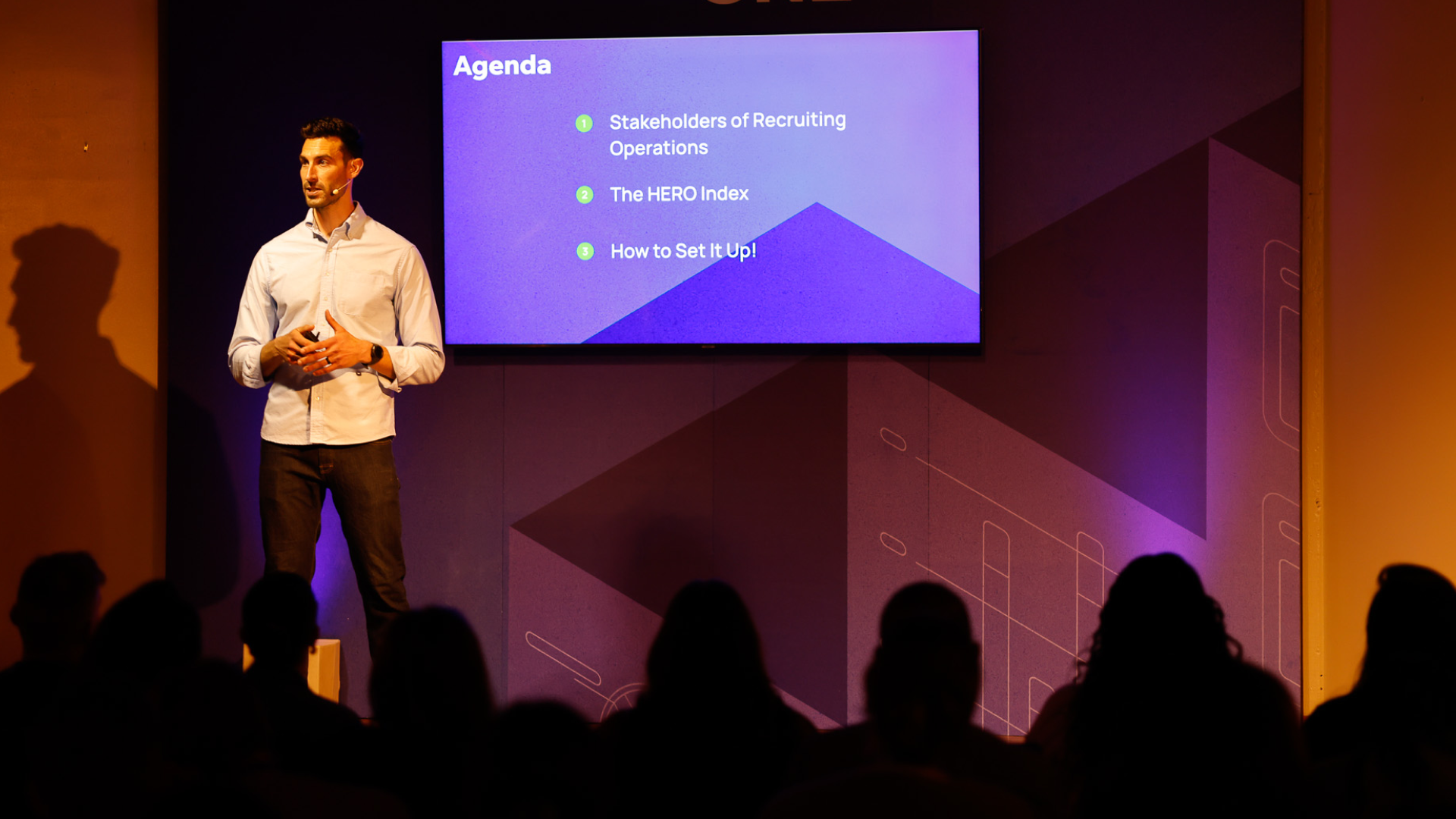
Running RecOps as a System
Will Ducey, Head of Recruiting Ops at Ashby, introduces the HERO Index framework for aligning recruiting metrics with stakeholder needs. Learn how to prove the strategic value of TA with evergreen metrics that drive clarity, impact, and continuous improvement.
View session