Redesigning Talent Strategy in the Open
Hear how Oyster are rethinking job design, talent strategy, and organizational decision-making in the age of AI.
Speaker

Key Takeaways
- AI is a powerful capability tool, but it is not a talent strategy on its own
- TA teams should start with business outcomes rather than predefined roles
- Internal mobility should be evaluated before creating new headcount
- Many hiring requests are actually process or workflow design problems
- Slowing down hiring conversations early can lead to significantly better organizational decisions
- TA leaders can play a strategic role in organizational design and workforce planning
- AI and tooling can create capacity, but judgment and contextual decision-making remain deeply human responsibilities
- Hiring should be treated as one possible solution — not the default solution
Transcript
Note: transcript is auto-generated, there may be typos.
I'm absolutely thrilled to be here today and tell you a little bit about how we have been rethinking talent decisions at Oyster. So, let's get to it. Like a lot of organizations right now, we have been pulled into more and more conversations about AI, efficiency, and the future of work. And the instinctive reaction is quite simply, AI can solve this, right? But we have had to pause and really ask ourselves, what are we actually solving? Are we solving the right problem? AI is very powerful, but it is not a strategy. And there is a real risk right now that we are starting to treat it like one. So a lot of companies are asking themselves, how do we use AI to be more efficient? When actually the more important question to us right now is what are we actually trying to achieve and what is the best way to get there? If we don't answer that first, then we are optimizing for the wrong things.
So at Oyster, that has meant shifting from thinking about efficiency as cost saving to capacity releasing. Creating space for the work that actually drives the impact. And that is where org design comes in. I personally believe talent acquisitions to play a much, much bigger role here. Not just reacting to headcount requests and decisions, but actively shaping how organizations are designed to deliver outcomes.
So we are very deliberately shifting at Oyster from hiring for roles to solving for outcomes. Starting with what the business is actually needing to achieve. Because honestly, once that's clear, the solution can often look quite different. So today I'm going to walk you through three things. First, the shift in how we're making talent decisions. Then the framework that we're building to support that. And finally, what we're learning as we test this in real time.
It's a little bit scary, but we're working through it. So this here is going to feel quite familiar. Someone leaves or a head count request comes in, we need new capacity. And the question very quickly becomes, do we backfill? Do we get a new role? Do we tweak the role we had? Do we replace it? We might actually consider internal mobility at this point, which I think is really, really important. But we're actually still starting from the assumption that a role exists. So the flow becomes request, approve, align, hire, and then we hope that we're solving the business problem. Success is filling the role in this instance, not necessarily solving the need. We're really asking whether the work itself needs to change, whether that be through tooling, through automation, or redesign. So with more options available to us now, the question is, why is hiring still the default? And that's controversial, right? We're a room full of TA people.
So the shift that we're making is actually just to quite simply slow down. Instead of starting with what role do we need, we're starting with what outcome are we trying to achieve. And once we're clear on that, we're exploring three paths. First, internal mobility. So can we solve this with the talent we already have in the business? For us at Oyster, we're super passionate about internal mobility. 25% of our roles last year were actually filled internally through the talent in our business.
Second, we're looking at AI and tooling, but we're asking, can we reduce or reshape the work with the tools that are available to us? Often what is looking like a hiring problem is actually a process problem. And third, we're considering a new hire, but only when there is a real capability gap that we've identified. So hiring in this instance is becoming one of three options, not the default. So how are we determining the right path? We are getting very, very curious, and that is TA superpower, right? We're asking a lot of questions, better questions, and we're connecting the dots that others might not see. And of course, we're having conversations much, much earlier because better decisions are coming from better inputs. So at its core, this framework quite simply is answering one question. What's the best way to solve that business need?
It's about challenging how we make talent decisions and stepping back to consider all of the options that we've got available to us. And that's where TA is playing a much, much bigger role right now. We're not just filling roles, we're actually shaping the organizational design decisions that are driving better outcomes for the business. So bear with me and we'll walk through how it works.
So we've begun testing what we're calling the outcome-first talent framework. And it's got four steps. Step one, we're defining the outcome. We are starting by aligning on that business needs. We're understanding what the goals are. We're setting very clear success metrics around the positioning. And we're making sure expectations are actually time-bound. So the output here is quite simple. It's an outcome statement. What are we actually trying to achieve? Second, and this gets really interesting, we're deconstructing the work. So we're breaking that outcome into activities that are required to deliver the work. And we're starting to separate what's really high-value work from what's more repetitive and process-driven tasks. So we're also looking here at the skills that we need versus the effort that's involved. And the output we get from this is a clearer work map, not just a role. And thirdly, we're choosing that path.
Now we do this in a really specific order. Internal mobility is always first. Then we're looking at AI and tooling. And only then, if we genuinely need to, we're considering making a new hire. So what we're left with is a really clear decision, but more importantly, the rationale for why that path makes sense. Still with me? Finally, we're delivering impact, OK? Whether that's redeploying someone internally, implementing new tooling, or hiring, we're executing and we're tracking whether we're achieving that business outcome. So what we're doing is shifting from did we fill a role to did we deliver the impact that we've clearly defined. So this is where it becomes real. We had what looks like a very straightforward backfill for a vendor management role.
I sat down with the hiring manager who actually fun fact is in the room today. So feel free to go find Erin and poke some holes in what we've done here. And we asked what outcome do we need? And to her credit, she was very, very open to this conversation. And we got to clarity really, really quickly. This actually wasn't about managing vendors anymore. What we needed was to build partnerships with our vendors to drive win-win outcomes and to improve customer success, in turn elevating the experience.
So we were shifting from reactive issue management to proactive value creation. So this really wasn't about replacing a role. We were redefining the success of that role and what that looks like at Oyster. Then we deconstructed the work. So what we really needed, in fact, was some strategic relationship management skills. We needed much clearer vendor performance frameworks. We needed proactive planning and governance.
And in turn, we also wanted to make sure we were building much stronger cross-functional collaboration. So this actually then went down a rabbit hole of a much broader conversation with the SVP of operations to align upfront on what our thinking was and how we could design for where we were going. We explored the three paths. And actually, we needed a bit of everything. So internal mobility to upskill and to move the team that we have from execution to ownership.
We need AI and tooling for the opportunity to introduce more structure, more automation, smarter workflows, and hiring, but for a completely different role profile. So hiring in this instance, it became the outcome of the process, but it was not the starting point. What we ended up with was a completely redefined role and a shift in how the team operates. We also had much stronger alignment across the wider teams as well.
And that, for me, was the point. What started as a backfill actually became org design in practice. With a much clearer direction for how this part of the business creates value. And that's pretty damn cool. So, this example has showed how it played out in practice, but to be completely frank with you all, we are not rolling this out as a finished framework. We're testing it as we go, we're building it live, we're working very transparently with our cross-functional leaders at Oyster.
And we're learning, right, within real hiring decisions that we're having. Every headcount request or backfill request to Oyster right now is an opportunity to apply this. And we're seeing how it goes. So we're in learning mode. But there are a few things that are becoming really, really clear. AI can create capacity, but it cannot replace judgment or the depth of foundational knowledge and the context that comes from that lived experience.
Internal mobility, it doesn't happen passively. It only works if you're actively designing for it. And a lot of the value, quite frankly, has come from having much better conversations earlier. We're slowing down at the start, and we're getting much more intentional decisions off the back of that. We are absolutely grounding this in data. Shout out to Ashby. We're looking at historical hiring patterns, internal mobility trends. We're surfacing where the capability already exists in the organization, and where we can build it through pathways and circumvents. And on the AI side, we're capturing real use cases with our ops teams and our tooling partners. We're understanding where work can be transformed, not just supported. There's obviously still a lot that we're figuring out, where decisions should sit, how that scales, and how we bring the organization on this journey, especially where AI creates uncertainty. But we're not waiting for it to be perfect.
We are building as we go. We're testing and we're learning and we're refining. And that's again the point. So I'm going to leave you with this. TA's goal is not just to fill open roles. It's to help design organizations that solve the right problems. You don't need to rebuild everything overnight, but you can start with the first conversation. You can start with the outcome that you want to achieve.
Be really honest about the work and get a lot closer to the capabilities that you already have in your business. Because honestly, this is as much an opportunity for people as it is about efficiency. I said it before and I will say it again, AI is really, powerful, but it's not a strategy. The strategy is clarity on outcomes and discipline in how we solve for them. Because ultimately, our goal isn't to hire more people.
Believe it or not, our goal is to build organizations that solve the right problems. And sometimes the best hiring decision is not to hire at all. Thank you very much, everybody. Have a great afternoon.
Recommended Sessions
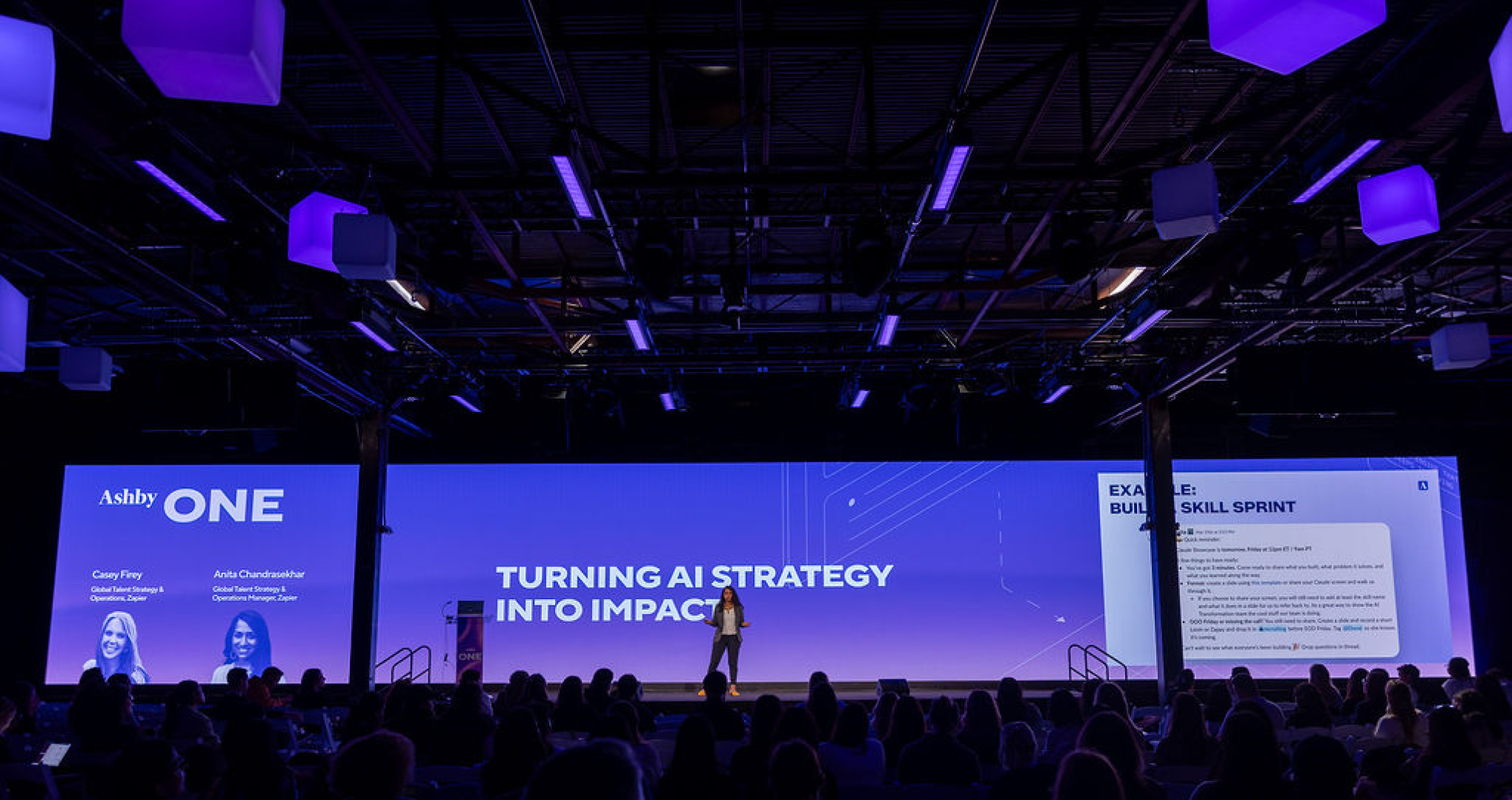
Designing for AI Impact in Talent
Inside how Zapier is operationalizing AI across Talent and People workflows, from experimentation and workflow redesign to impact measurement and adoption.
View session
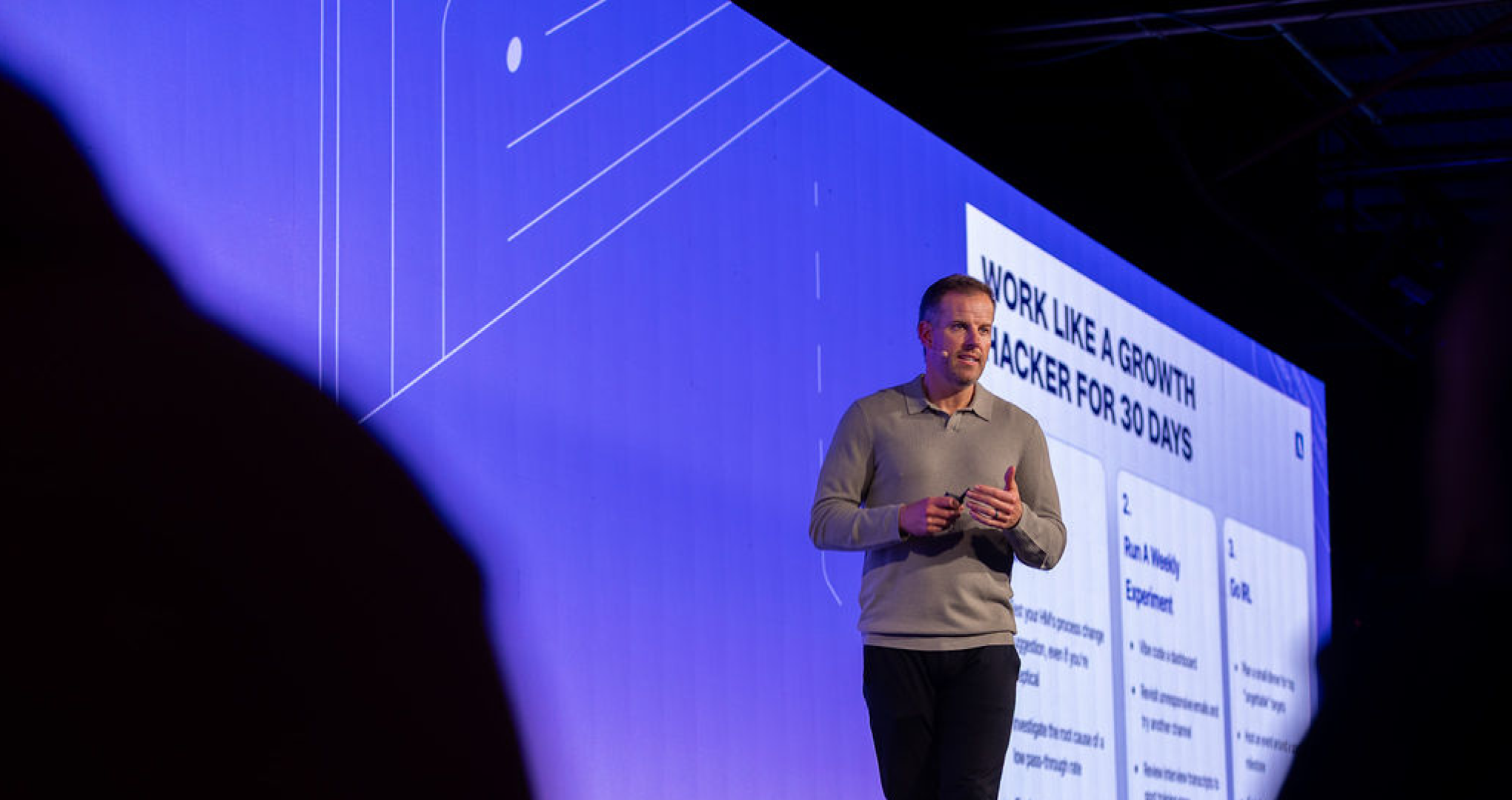
What TA Can Steal from Growth Hackers
Hear how Matt Stephenson from Bain Capital Ventures applies lessons from the growth hacking era to modern recruiting strategy.
View session