Introducing Ashby People Workflows
Learn how Ashby People Workflows helps talent teams automate onboarding orchestration and how Flock used it to save 20 hours of manual work per week.
Speakers


Key Takeaways
- Onboarding is a critical extension of hiring — it's your first opportunity to get new hires engaged, successfully ramped, and ultimately retained. Most teams are managing it with a Frankenstack of spreadsheets, draft emails, and Slack pings.
- Ashby People Workflows is a workflow engine that automates the orchestration of onboarding tasks, communications, and stakeholder coordination behind the scenes — freeing talent teams to make onboarding not just complete, but incredible.
- Flock saved 20 hours of manual work per week after redesigning onboarding around People Workflows, targeting 90% automation with 10% intentional human-in-the-loop moments.
- Pre-boarding is the most logistically taxing and cross-functional part of onboarding — and it's the first time a new hire experiences the company as an employee. Flock reduced background check initiation from 48-72 hours to minutes by automating the flow from offer signing in Ashby directly into their background check provider.
- Hardware requests are a surprisingly high-friction onboarding moment. Flock replaced a manual spreadsheet-based system with a tiered hardware selection flow in Ashby that routes automatically to IT or a third-party shipping partner — eliminating laptop swaps and first-day resentment.
- Flock built five distinct onboarding workflows for different employee types (standard, Finnish, warehouse/field, interns, and AEs) — allowing every group to receive a personalized experience without manual routing.
- Recruiters are the natural face of onboarding — they're already the new hire's first friend. At Flock, all automated onboarding messaging comes from the recruiter and is tied back to the employee value proposition, creating continuity from candidate to employee.
- New hire surveys (tracking role clarity, manager effectiveness, enablement, connection, and impact at 1 week, 30, 60, and 90 days) are the missing puzzle piece to quality of hire — providing the new hire's perspective alongside the manager's perspective.
Transcript
Note: transcript is auto-generated and may contain minor inaccuracies.
Melissa Bierly
Hi, welcome to From Great Hires to Great Employees: Scaling Onboarding with People Workflows. I'm Melissa and I'm a senior product manager at Ashby. And later I'm going to be joined by Laura Barnes, VP of Talent at Flock. So, a little bit about what to expect. First, I’m going to talk a little bit about what People Workflows is and why we built it into Ashby. Then we’re going to put it into practice with a Q&A with Laura to hear how she’s approached onboarding since becoming a People Workflows design partner. Have you all heard a story like this? There's an excited new hire who went through a really engaging recruiting process, but it all kind of falls apart after that. They haven't heard from their manager, they can't log into the systems they need, they don't even have their laptop. This was a chance for us to get the new hire excited as an official employee, but we've already lost them. For a lot of teams, unfortunately, this story doesn't sound too unfamiliar. Onboarding is where the new hires that you worked so hard to acquire are activated, but usually it's lacking the considered approach that we see during the hiring process. It's your first opportunity to get new hires engaged, successfully ramped, and to ultimately retain them. It's a critical extension of hiring.
Melissa Bierly
So if onboarding is important, why are we not doing it well? Well, onboarding is hard to manage. There's a ton of manual work, particularly if you're scaling across countries, departments, teams, regions. It's hard to even understand what's happening, let alone make it excellent. The teams I've talked to are usually working with a Frankenstack of spreadsheets and emails and Slack pings. Everyone's trying to figure out where everything is and what's going on. And that means things get delayed or missed, and that's a missed opportunity to successfully activate that new hire and continue the great experience they had during the recruiting process. That's why we added the People Workflows add-on. Alongside Quality of Hire, it helps you ensure that you close the loop that you started with an excellent hiring process. People Workflows is a workflow engine that helps you automate onboarding — handling the orchestration of tasks, communications, and stakeholder coordination that's happening behind the scenes. For the new hire, they don't know that this coordination is happening, which is a good thing. All they know is that they have what they need and they know what they need to do. It's a seamless experience. And this frees you up to not just complete onboarding, but to make it incredible. And we are currently working with over 25 design partners to ensure this product is delivering what we built it for. And one of those design partners is Laura Barnes, VP of Talent at Flock. Instead of a demo, we thought it would be great to bring up someone onto the stage who can actually talk about how she’s strategically thinking about onboarding, and putting it into practice using People Workflows. So, Laura, please come up!
Melissa Bierly
Laura could you first tell us about what Flock is and what you do there?
Laura Barnes
So, Flock is a public safety technology company. Today, we solve about 20% of crime in America and we've returned over thousands of missing people back to their families. It's extremely impactful work, it’s really exciting, it’s one of the reasons I've been there for five years. I joined as their founding technical recruiter and then grew into a VP of Talent, and I've been able to see it go from about a hundred to seventeen hundred people, and it’s been a fun ride.
Melissa Bierly
Can you tell us a little bit about what onboarding looked like before you had People Workflows at Flock?
Laura Barnes
Extremely manual. Like probably most people in this room, I imagine. I have to shout out my broader people team who was handling it — it's insane the amount of work those people put into it. Crazy trackers, organized draft emails — we would have like thirty draft emails for all the hires, ready to go and staged by day. Absolute insanity, but somehow they managed to stay organized and efficient and put on this massive production and the new hires had no idea we were panicking. To put it lightly, we hired about nine hundred people last year. Just think about the amount of time, effort, energy, every email, every reminder, every spreadsheet, every calendar invite that was manually sent by a person. That’s crazy. When we got to sit down and think about redesigning onboarding for the first time in a long time, the first thing I wanted to do was build something that captured the amount of love and dedication that our team was already putting into this, but build it around an infrastructure based on automation. Our goal was to get to a point where our onboarding journey could be about 90% automated and have 10% still manual where we wanted a human in the loop. And today we've been able to save about 20 hours of manual work a week.
Melissa Bierly
I think in some companies it might seem a little strange for talent to own onboarding. So I'm curious why you decided to raise your hand to do that.
Laura Barnes
So like most startups or companies in general, you're going to go through periods of growth and periods of focus. Clearly last year was a massive growth year for us with all the hiring we did. Going into 2026, we knew it was going to be a focus year. And so I knew that we weren't going to hire as many people. I went to my chief people officer and said, hey, we have a really great team — instead of doing the natural thing most people do and letting them go, I said, let's refactor their job. Let's sit back and actually think about how do we make the job more impactful and more strategic. And so today, our recruiters spend about 75% of their time still focused on recruiting, and 25% of their time focused on new hire success, which has been a really awesome transition for us to go through. And if you think about it in general, recruiters are already viewed as that new hire's first friend. You're their confidant, you're the person that they trust. I cannot tell you how many times we got to offer close and a candidate chose Flock because of that relationship they have with you. So, naturally, continuing that relationship just makes so much sense.
Melissa Bierly
For folks who know their onboarding needs some improvement, where would you suggest that they start? Where did you start?
Laura Barnes
Hopefully you do it before you're at seventeen hundred people — major regrets over here. Onboarding is very complicated. When I raised my hand for this project, I thought it was going to be really fun and easy. I was proven quite wrong. There are way more cross-functional partners involved in onboarding than you probably even realize today. I feel like I still find some every week coming out of the woodwork. What you should do: go meet with all of those people first. Get a list of your stakeholders, set a meeting, go talk to them about everything they're doing, what sucks, what's painful, what do they like. Then pull out Lucid Chart or a Google Sheet, make that list, write down who owns everything, what's the context behind it, is it manual or automated today. Put a big red mark on all the big pain points and terrible manual things — those are the first things you want to tackle when you’re thinking about onboarding. Since it's such a massive cross-functional project, the only way to get people to want to go on that journey with you is to create buy-in. You create buy-in by solving their problems. If you can remove those massive blockers and roll out small enhancements where that one team goes, oh my God, I just got hours back, and now I don’t have to think about that — suddenly they're going to want to help you when you want to shake up their current process and do something new. So that’s where I’d start. And then get to that 90% automation point. There's always going to be an aspect of onboarding that has to be manual — a failed background check, that's super sensitive. You probably want a human in the loop. Or at Flock, we have to do motor vehicle record checks, and unfortunately our vendor is not very modern, so that will never be automated for us. So sometimes you’re stuck with that 10%. But if you can get 90% there, which we're doing with Ashby today, that's a massive win.
Melissa Bierly
So, I know from previous conversations as a design partner, you identified the pre-boarding process, before the start date, as a prime opportunity for improving. Can you talk more about that?
Laura Barnes
Pre-boarding is the most logistically taxing thing that exists. It is so cross-functional and so nuanced. And it is also the first time that your new hire is experiencing a company process as an employee. You want to get that right. It’s embarrassing when you don’t. I could probably spend an hour going through everything we changed, but I'll focus on two things. First: background checks. Historically at Flock, a candidate would sign their offer letter in Ashby. We would then have an automated report that went to our People Ops team three times a week with all the offer details. They would receive that report, go into Rippling, manually create that employee's profile, invite them into Rippling. The employee would then have to sign up for Rippling, get in to Rippling, sign some documents, and then eventually initiate their background check. This process was taking somewhere between 48 to 72 hours. If you own onboarding today, you realize that every second counts during pre-boarding, especially when you're trying to get someone through all their pre-screening requirements so you can actually honor their start date. Nothing’s worse than pushing a person. Today, when someone signs their offer letter in Ashby, they are automatically sent into the correct People Workflow, and then automatically sent their background check. It's like minutes, maybe even seconds. You genuinely can't get better than that.
Laura Barnes
The other one that comes to mind is hardware requests. Historically, we actually didn't let new hires choose the hardware or laptop they wanted — we just provided it to them. We had this gnarly spreadsheet of all the teams inside of Flock. We’ve gotten so big that the list is really scary. Each team had the laptop that we assumed that they would need. We probably got it right 80% of the time. We would be sending them a Mac, they would go in on their first day, and 20% of the time we probably got it wrong. New hires wouldn't tell you right away that they hate their laptop— they'd get two weeks in and finally say, I hate this laptop. Of course, as a wonderful employer, we'd send a new one. But that is horrible. My IT team has to go reconfigure a whole new laptop. New hire has to ship back their old laptop, receive the new one, and then reset all their passwords. That is a nightmare, and also lost productivity. Now with Ashby, we have a tiered approach to our laptops and our new hires are able to request the hardware that they want. We have about five tiers. Each new hire gets to pick what is best for them. And it is automatically sent to either our IT team or our third-party shipping partner, and they handle getting the laptop correctly to the new hire on day one. Now, we don't have that issue anymore. We don’t have to spend extra time, we don’t have to have people shipping them back. And people are really thrilled on day 1.
Melissa Bierly
Another thing that makes Flock unique is that you have different types of workers, like field workers installing security cameras, and employees in the office, and employees inside of our outside of the United States. How do you manage that?
Laura Barnes
We're very complicated, we don’t like to be easy. We looked at all of the different employee types that exist inside of Flock and started mapping out what is that person's onboarding journey, where are the changes between groups. Today we've landed at five workflows: a standard one, one for our Finnish employees, one for our warehouse and field employees, one for our interns, and one for our account executives that was built in conjunction with revenue enablement. What's nice is Ashby gives you so much flexibility to say, all of those people do need something different. For example, our field employees have different benefits and pre-screening process than our standard employees. Our Finnish employees have different benefits and pre-screening than our field and standard employees. Our interns experience Flock on a very condensed 12 week basis so their experience is vastly different. And our regional account executives have revenue enablement and all the training, so their onboarding is different than everyone else’s. Now, we’re able to cater to each one, and make them feel like their experience is super personalized. But you don't want to go absolutely berserk building out 17 workflows — you will hate yourself for it. You want to have that mindset of set it and forget it. That’s the point of automation. So, “standard” probably sounds super misleading — inside of standard, Ashby is fantastic, and you’re able to filter by team and department. I can make sure that engineers are receiving different messaging than someone in marketing. You can also build custom fields — for us, we do orientation every other week, so we have on-cycle and off-cycle start dates, and depending on which one you're in, you get the right messaging to know when your orientation is. So it's all extremely personalized without me actually having to give any thought to it.
Melissa Bierly
Another thing we talked about that really stood out was your focus on the hiring manager experience and how that changes from recruiting over to employee. Why did you decide to focus there and what does it look like with Ashby now?
Laura Barnes
We didn't really have a hiring manager experience. And that's a bummer — they're coming from just hiring this person with recruiting, doing weekly syncs, you probably slack them way too much. And so they're having this high, they've just made this hire, and then it was crickets. That sucks. When we sat down and thought about making it good for them, I first thought about all of our manager types. At Flock — and probably at most of your companies too — you have first-time hirers at your company. You have first-time managers in general. You have hiring managers who maybe hire three or four times a year. And you have some people who may onboard 20-plus people. Each person's onboarding muscle is quite different across your entire workflows. And managers don't really like asking for help. It's awkward — they want to look competent. So we built out a standard workflow for a manager. So, during pre-boarding: we now tell them when their candidate just signed, we let them know when they're cleared to start, we message them again when they're one week out, and we message them again the day before a hire starts. In that one-week-out messaging, we ask them to submit their finalized 90-day plan. We also ask them, would you like extra support? It's entirely optional, but it puts the ball in their court to not have to awkwardly ask for help. So now, no matter where they are on their journey of being a manager, they can opt in or out, and they’re going to receive the correct journey as we go into onboarding. So onboarding for us looks like: on day 1, I have a message from the hiring manager to the new hire that delivers their 90 day plan. I love this, because let’s say the hiring manager refused to give it to you. Well, they just sent a broken link to their new hire, and the new hire’s going to ask for it. That means they have about 3 hours to deliver it. That’s called “reinforcing your culture,” and we love that. We also check in with a 2-week experience survey, and 30/60/90 day nudges to show what milestones the new hire is hitting. What’s awesome about that is that in the nudge we provide green flags — what this person should be achieving at this point in time, and red flags and what to do if you’re experiencing red flags right now. Because how many of you have gotten to the point where you’re 90 days in, the hiring manager isn’t happy with the new employee and wants to fire them, and the documentation is non-existent. So we are baking in ways to capture documentation and have those conversations earlier when those mis-hires do happen. And then if you think about that extra support journey, we help them with how to hold daily standups, how do you transition to an actual 1:1 and what should you be getting out of it, what are your responsibilities as the new hire versus manager. There’s just so much more coaching, and it’s fed to them and the right moments. And they don’t even have to reply. We now know that they’re receiving the coaching they want and need, when it’s the right time to deliver it.
Melissa Bierly
On a similar note - for the new hire’s experience, there can be a steep dropoff from recruiting to employee experience. How are you managing that with Ashby?
Laura Barnes
I was a recruiter not too long ago, and I still work reqs, so I love my candidates deeply. And I find that recruiters should own it. You have this beautiful relationship. And a lot of times, the recruiter is the reason someone joined your company — that’s incredible. So when we thought about how to continue to capture that magic and bring it to onboarding, we wanted the recruiter to be the face of it. At Flock, we don't have a formalized buddy program. Instead, we've injected our recruiter into that role. All of our automated messaging that starts from the point someone enters our funnel all the way out to the program-end message at 90 days, all comes from your recruiter. And it's all written and tied back to our employee value proposition. So it feels extremely Flock, extremely authentic. You as the new hire are so freaking excited because your recruiter, your best friend, your first friend, is checking in with you on all these big milestones as you go through those ninety days and they're rooting for you. We're teaching you how to have that 30-day conversation with your manager, providing you a guide, teaching you how to build your working-with-me doc, reinforcing the culture, holding your hand, teaching you about our ERGs and Slack groups. It feels really natural, and it's been a super cool transition to put in place.
Melissa Bierly
You’ve talked extensively about Quality of Hire in Ashby, and you’ve also implemented new hire surveys in the People Workflows automations you’re running. How are those different than quality of hire?
Laura Barnes
New hire surveys are the missing puzzle piece to quality of hire. Last year I definitely alluded to wanting this V2 model where you had the new hire perspective and you had the manager perspective. What's really cool with this tool that Ashby has built is they're giving you that V2 right now. You now have both perspectives and you can put it together as a talent team. That’s incredible, and that used to be something you couldn’t go and do on your own—you would have to collaborate with HR. The lines are getting blurred these days, which is fun. With our new hire surveys, we are tracking five key things: role clarity, manager effectiveness, enablement, connection, and impact. And as we send these surveys at one week, 30 days, 60 days, and 90 days, we want to see those five themes keep trending upward. That’s really important to us. Or maybe they stay consistently high—some new hires come in and they’re 10s across the board. We want to keep that 10 energy going, we want them to love every second of Flock. Now, we can go in and start analyzing. If for some reason enablement is dropping, that probably means there's something in our pre-boarding or how we're getting people ramped into the role that's not working. So I would encourage you as you're setting up these surveys: think about those five things that are really important to your company, put them into place, and start analyzing that data. And when you're bringing it back alongside quality of hire, now you actually have both sides of the puzzle. You get to tell this really beautiful story about whether this hire was a quality one, not just from the manager’s perspective, but also in terms of their engagement with your company.
Melissa Bierly
I remember a conversation we had where you said, “If the manager loves the new hire, but the new hire hates it here, then that’s not a good hire.”
Laura Barnes
That’s a terrible hire. They’re going to quit.
Melissa Bierly
Last question: what would you say to a recruiting team that's not sure if they should handle onboarding?
Laura Barnes
It can be extremely weird putting yourself out there and especially asking for something that historically has not been owned by talent. But we're entering this new era where the lines are blurred. You have a really unique opportunity to actually go out there and position yourself as a very strategic recruiter. We're probably all already doing so much with quality of hire. You probably want to do more than just report on it — you actually want to action on it. I would encourage you to go back to your companies, start seeing how can you bring it into the role, how can you start having those conversations, how can you actually inject yourself into these conversations about new hire success? Because I think that's where the future of talent is going. Right now is your time. Reach up and grab it. Go make yourself more valuable at your company. Stop being viewed as a role filler and jump into this really strategic position. It's super exciting. Onboarding is very complicated — I've definitely got my ass handed to me a few times — but I have enjoyed every second of it and it's honestly made me better at talent acquisition as a whole.
Recommended Sessions
Blurring the Lines Between Talent and People
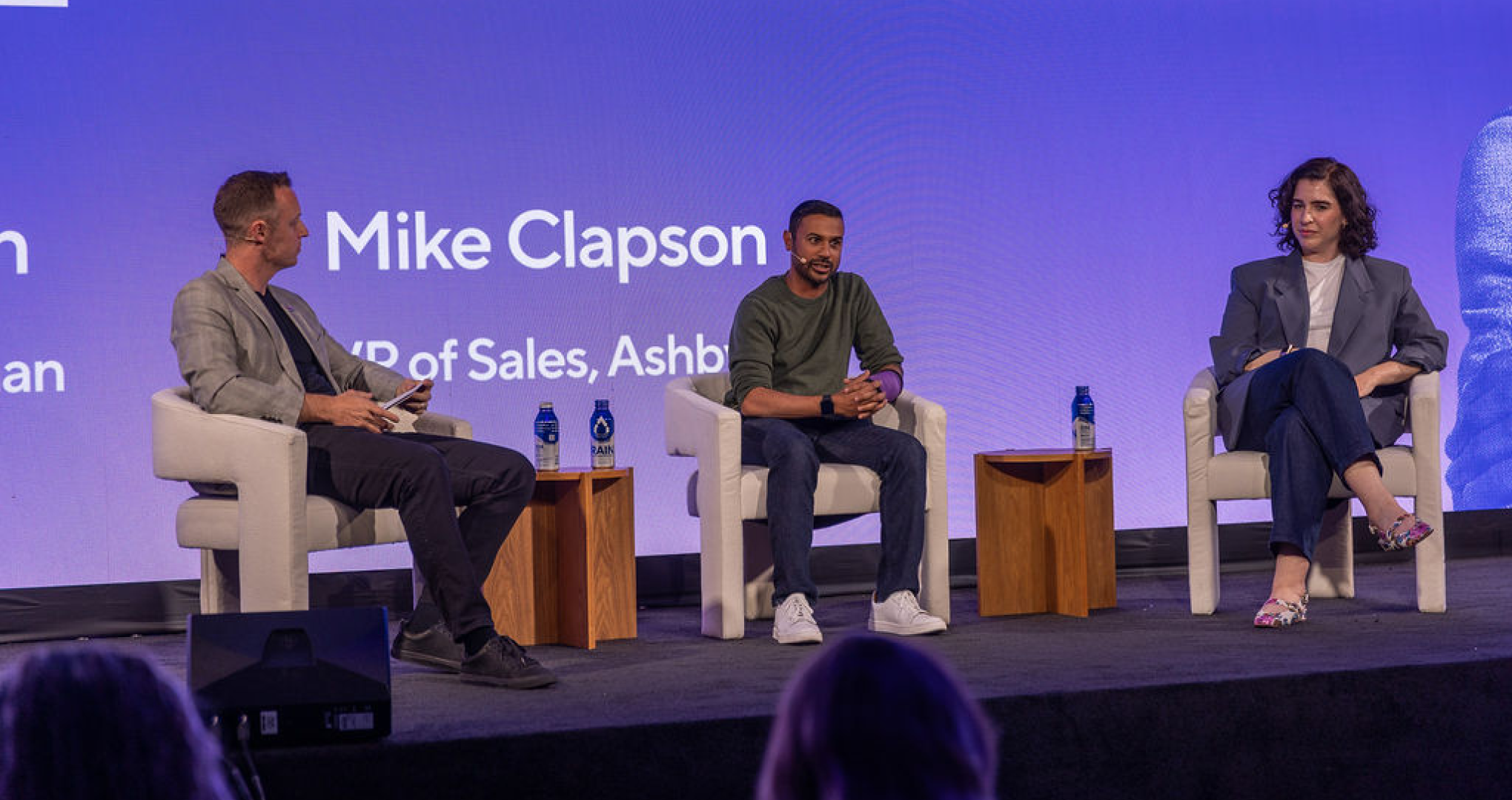
A fireside discussion on how to build tighter partnerships between teams, create stronger feedback loops across the employee lifecycle, and ensure the signals coming from employees inform the way companies recruit the next generation of talent.
View session
Onboarding at Scale
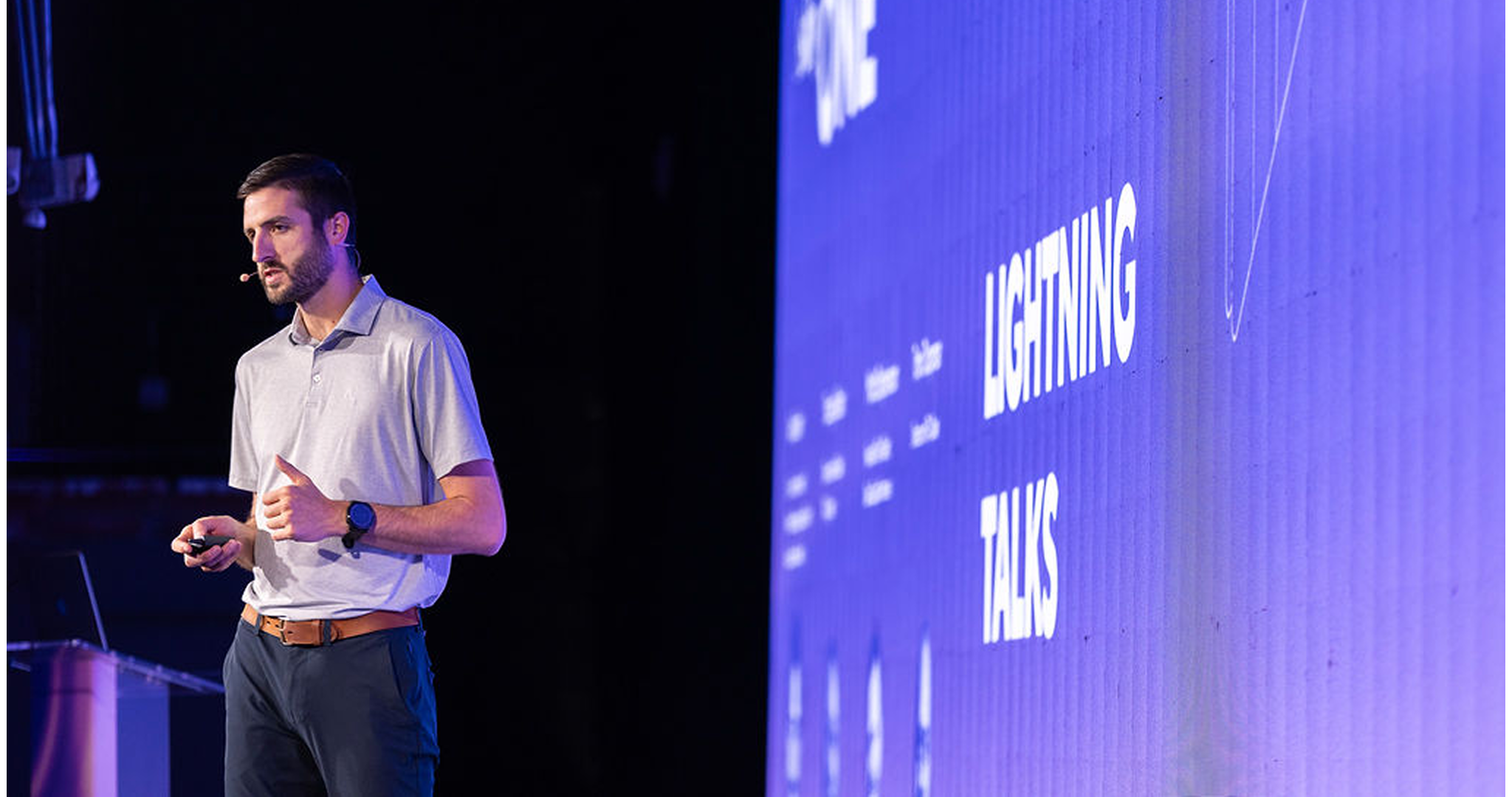
See how Renuity evolved from fragmented, manual onboarding processes into a more connected and visible workflow system — and why visibility ultimately mattered more than automation alone.
View session